The promise of AI in supply chains has long been tied to visibility—better dashboards, more data, and faster reporting. Yet for many logistics providers, manufacturers, and warehouse operators, the challenge is no longer access to information. It is translating fragmented operational data into timely decisions and coordinated action.
This week, New York-based Traba announced Neo, a new AI-powered decision intelligence platform designed to operate across enterprise systems and help supply chain organizations automate workflows, anticipate disruptions, and make operational decisions in real time.
Rather than replacing existing technology investments, Neo sits on top of an organization’s software stack—including ERP, Warehouse Management Systems (WMS), Transportation Management Systems (TMS), HRIS platforms, and carrier feeds—to connect data sources and automate operational processes.
The launch marks an expansion of Traba’s strategy beyond labor management and into AI-driven operational intelligence.
From Insights to Execution: The Rise of Decision Intelligence
Enterprise operations have traditionally relied on a collection of specialized systems. ERP manages finance and inventory, WMS oversees warehouse execution, TMS coordinates transportation, while HR and labor data live elsewhere.
While each platform serves an important role, operational leaders often find themselves stitching together information manually to make decisions.
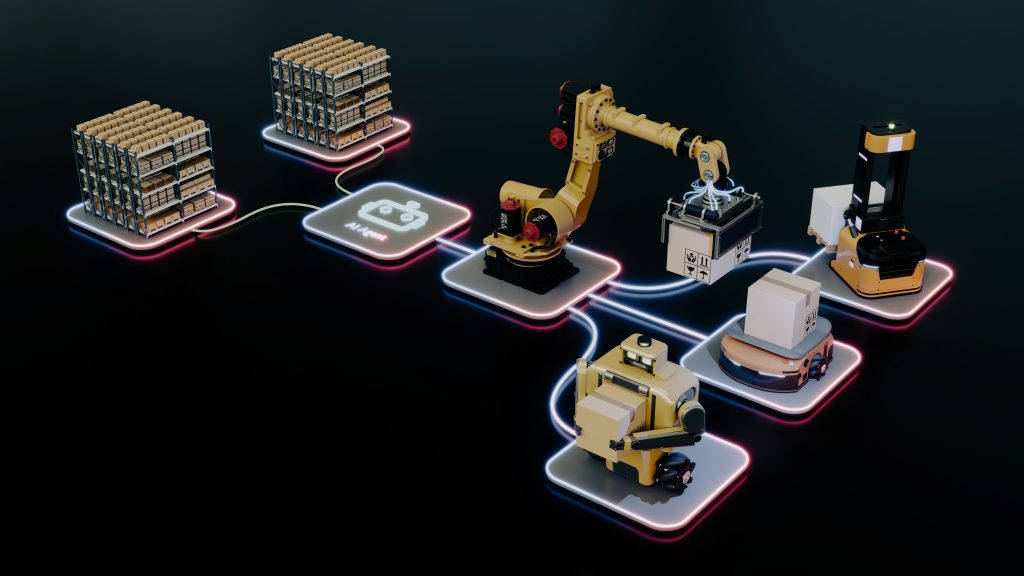
Neo aims to address that challenge by acting as a decision layer across these systems.
“The gap was never missing data,” said Akshay Buddiga, Co-Founder and CTO of Traba. “It was that no system could act across all of it. So for years, operators ran on gut instinct. Neo changes that. Grounded in years of real data from the floor, it decides the next move, takes it, and gets sharper every time.”
The company says Neo can currently support a range of operational use cases, including labor forecasting and shift optimization, automating post-shipment exceptions and carrier claims, analyzing customer-level profitability, and identifying risks such as demand spikes or service-level agreement (SLA) breaches before they affect operations.
Building on Operational Experience
Neo’s development builds on Traba’s experience working with light-industrial organizations and labor-intensive environments.
According to the company, years spent supporting thousands of facilities exposed a recurring issue: organizations possessed large amounts of operational data but lacked tools capable of translating that information into coordinated actions.
This operational context forms the foundation of Neo’s AI models, which combine historical data with real-time signals to support decision-making.
The broader industry trend is notable. As enterprises invest in AI, attention is increasingly shifting from systems that generate insights to systems capable of recommending—and eventually executing—actions. Analysts have begun describing this evolution as the movement from “systems of record” toward “systems of execution,” where AI agents operate alongside human teams to manage increasingly complex workflows.
Neo positions itself squarely within this transition.
Early Results from Third-Party Logistics
One of Neo’s early design partners is ShipSmarter, a third-party logistics (3PL) provider founded by Cody Branham.
According to Traba, within the first month of using the platform, ShipSmarter’s leadership team reduced administrative workloads, gained customer-level profitability visibility, and reclaimed time previously spent on manual operational tasks.
“I asked ChatGPT each day for the last week to provide me correct addresses for orders with address holds,” Branham said. “Today I asked Neo, and the orders are already ready to ship. It’s smarter than ChatGPT.”
While early customer results remain limited, the example illustrates a broader shift occurring across logistics and industrial operations: AI is increasingly expected not only to answer questions but also to execute workflows and resolve operational bottlenecks.
The Future of AI in Industrial Operations
For supply chain leaders, the rise of decision intelligence platforms raises important questions about the future role of ERP and operational systems.
Rather than replacing core enterprise applications, AI increasingly appears to be emerging as a connective layer—one capable of synthesizing data from multiple systems, recommending actions, and automating repetitive decisions while keeping humans in control.
Traba believes this vision extends far beyond current use cases.
“Over time, Neo will extend across the supply chain, from asset optimization to network-wide profitability,” said Mike Shebat, Founder and CEO of Traba. “The mission was always bigger than any one product. It’s about bringing the digital and physical sides of an operation together at last, and giving operators the tool they’ve always deserved.”
As AI adoption accelerates across logistics, manufacturing, and distribution, platforms like Neo illustrate how the conversation is evolving—from intelligence that informs decisions to intelligence that actively participates in running the business.
Neo is available immediately for supply chain and industrial operators.

ERP News Editorial Team
The ERPNews Editorial Team covers global developments in ERP (Enterprise Resource Planning), enterprise software, cloud platforms, AI, automation, and digital transformation, providing independent news and editorial analysis for senior business and technology leaders. Our reporting focuses on market signals, strategic shifts, and enterprise impact across the ERP and enterprise technology ecosystem.
For editorial inquiries, please contact:
📩 [email protected]