
Across the United States, several people face preventable injuries. Each year, roughly 62 million Americans need medical attention as a result of such harm. Approximately 95% of personal injury lawsuits are resolved before trial, according to Clio.
Personal injury law is part of civil law that gives a remedy when one person’s wrongful conduct actually causes harm to someone else. It covers a broad set of situations, like car crashes and slip and falls. Medical malpractice, product defects, and animal bites are other examples of what could qualify as personal injury cases.
Dealing with all the issues that are associated with a personal injury case is not easy, according to Asheville personal injury lawyer David Gantt. When a personal injury attorney provides legal representation, these matters can be easier to handle.
The courts will examine four factors in personal injury cases to determine whether the case is valid.
Let’s step into what these elements are and clarify whether the case you’re dealing with counts as a personal injury case.
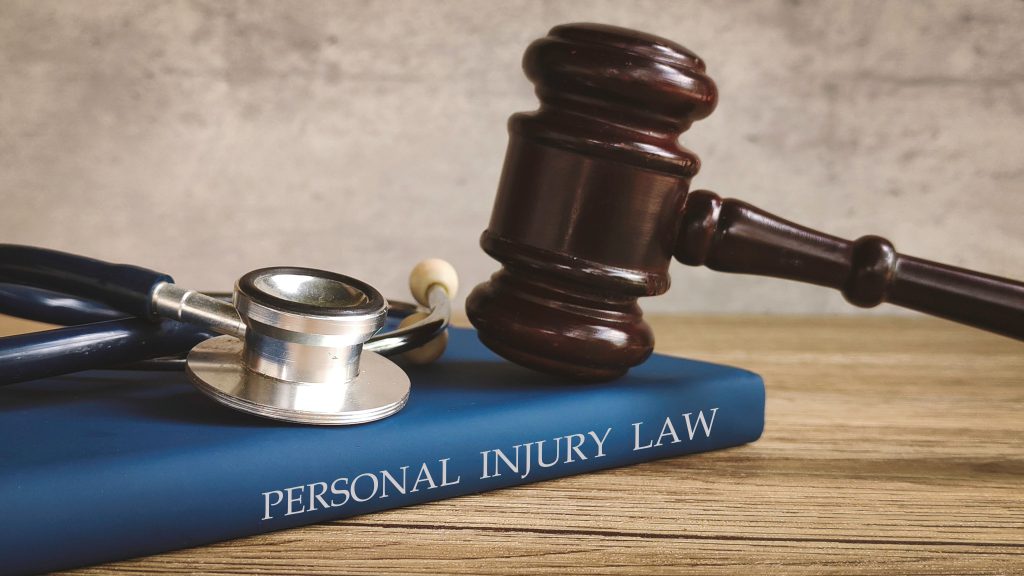
The Four Elements Every Personal Injury Case Must Establish
If an injured person were to file a lawsuit claiming that they sustained personal injuries, they would face a number of hurdles in succeeding in that lawsuit. That person must satisfy the following elements: duty, breach, causation, and damages. If one of those elements is missing, the lawsuit will not stand.
Duty refers to the legal obligation a person has to another person. Duty means you must act with reasonable care toward people who may foreseeably be harmed by your actions. For example, a driver must operate their vehicle according to traffic rules and the broad expectation of reasonable care. A physician has to treat patients according to the current standard of medical care. Property owners are expected to keep their space in a reasonably safe condition for lawful visitors. Product manufacturers have a duty to design and build products that are reasonably safe for the intended consumers. Usually, the existence of a duty isn’t really the issue. The legal relationships that create that duty are pretty well known and already set. What people argue about more often is whether someone actually violated that duty.
Breach is failing to meet the applicable standard of care. To illustrate, when a driver breaks the red light, one may say that he or she has violated the duty of care that should be given to other road users. A breach of duty occurs when a surgeon operates on a limb other than the intended one. In practice, such conduct can be classified as falling below the minimum standard for surgeries. Another example of a breach of duty is a spill or wet floor being left unattended for over an hour in a shop. The facts of the case indicate a breach of the duty of the property owners in ensuring that there is a safe environment for the customers.
In practice, a breach usually occurs when someone shows what happened and then compares it to what the law required. Proof can come from things like witness testimony, video recordings, and expert opinions about the applicable standard of care.
Causation has two parts: actual cause and proximate cause. The actual cause is basically the breach that is the “but-for cause” of the injury. For example, the plaintiff would not have been harmed if the defendant had not behaved carelessly.
Proximate cause is the act of determining whether the harm was a consequence of the breach and not just a mere possibility of occurrence.
Causation becomes contested when there are multiple possible causes for the same harm. A dispute can also happen if there is a gap in time between the event and the damage. When the plaintiff has pre-existing conditions that complicate the situation, the other party could argue that the injuries were a result of these prior conditions.
Damages refer to the real harm the plaintiff actually endured. This area is also where personal injury law differs the most from contract law or criminal law. You can’t really have a personal injury claim without measurable damages. A near-miss accident that results in no injury does not create a personal injury case. A negligent act that was spotted before any harm occurred, or a breach that only caused emotional distress in some jurisdictions, will not create a personal injury case.
Damages usually cover medical bills, lost wages, reduced ability to earn, pain and suffering, and loss of enjoyment of life. In worst cases, punitive damages may apply.
You can learn more about personal injury cases and how to legally protect yourself when you are a victim of such negligence by visiting the website https://www.lflaw.com/.
Negligence vs. Strict Liability vs. Intentional Torts
Most personal injury claims come from negligence but know that there are two other ways to assign liability to certain parties.
Strict liability applies in product liability situations when a product is defective and also in certain abnormally dangerous activities. In a strict liability product case, the injured person usually does not have to prove the manufacturer was negligent or reckless. Instead, the manufacturer can be held liable if the product was defective and that defect actually caused the injury. The reason this rule exists is kind of straightforward: companies are often in a better position than consumers to spot product defects, stop them earlier, and also absorb the expenses from the harm those defects cause.
Intentional torts tend to show up when there’s assault, battery, intentional infliction of emotional distress, and false imprisonment. These situations usually ask for proof that the defendant acted on purpose and not merely with negligence. For instance, when someone physically hits another person because of disturbing, provoking or offensive actions, this action can be considered both a civil battery and a criminal assault.
The criminal case is governed by the government while the civil suit is launched by an individual who has suffered injuries. The civil claim made by the victim will allow him or her to get monetary compensation. Intentional tort claims also frequently connect to punitive damages if the defendant’s behavior was proven to be intentional.
Common Case Types and What Makes Them Personal Injury
The following case types are the most commonly encountered by personal injury lawyers and help show how the four elements of a personal injury case apply in real-life situations
- Motor vehicle accidents: It is a well-established law that all drivers have a duty of care to other users of the road. Traffic citations, expert testimony, and eyewitness statements help demonstrate any violation of a driver’s duty of care. Determining causation means determining the close relationship between the injuries sustained and the car hitting and passing the respondent. Damages are proven with medical records and financial documentation.
- Slip and fall and trip and fall: You really have to show that the property owner knew or at least should have known about the dangers present on the property. You also have to prove that the landowner did not resolve the problem or inform visitors about it. The notice requirement, whether it is constructive or actual, matters a lot. This distinction will tell whether a lawsuit can move forward or not.
- Medical malpractice: For breach, it normally takes expert testimony to say that the defendant’s actions fell below the standard of care for the relevant specialty. Causation then has to connect the violation of the existing standard to the plaintiff’s injury. This part often also needs expert input, since the causal relationship between medical conduct and medical outcomes is rarely something a regular jury would easily understand.
- Product liability: In these cases, the plaintiff must identify a specific problem with the product, such as a design defect, a manufacturing defect, or a failure to warn. After having identified these elements, one can then demonstrate that the defect existed when the item left the manufacturer’s control. The same defect must be shown to have caused the injury while the product was used as intended or in a reasonably foreseeable manner.
- Dog bites: In most states, strict liability applies when the bite occurs and the injured person is lawfully present. Usually you only have to prove the bite happened, identify the owner, and show the injured person was there lawfully. In most cases, you do not need to show that the owner was negligent, at least not in the usual way.
What Determines Whether a Case Is Worth Pursuing
Not every valid personal injury claim is really worth it to push into litigation. In a practical sense, the estimated worth of a case can often gravitate towards the scale of loss, the liability determination, and the potential future ability of the at-fault party to pay. If you have a personal injury case and the liable party has no insurance and assets, then recovery could be impossible. A high-stakes case with deeply contested responsibility issues can barely succeed in dispositive motions or in convincing a jury.
One should recognize that constraints may be imposed on the time limit within which an action can be brought and these are varied across states. Usually, claims involving injury to one’s person must be filed within the first one or two years after the injury. If you miss that window, the claim gets barred for good. In cases where government defendants are involved, the time limit is 60 to 180 days, depending on the jurisdiction. The National Conference of State Legislatures tracks personal injury statute of limitations periods by state.