
Your packaging is the first physical handshake between your brand and your customer, and getting it wrong is expensive. Top packaging companies are increasingly expected to solve real problems: sourcing recyclable materials without blowing the budget, staying ahead of plastic reduction mandates, and absorbing raw material price swings on resin and paperboard. After reviewing each company against real production criteria and publicly available customer feedback, this guide breaks down five options worth your serious attention.
How this ranking was put together
Each company was evaluated using publicly available information pulled from review platforms, case studies, directories, and official websites. Only options with a proven track record in packaging manufacturing made the final cut. Options without verifiable real-world results were left off the list entirely.
→ See the full research breakdown
- Plus Packaging – Best for brands seeking custom, eco-friendly packaging with human-led creative guidance
- Arka – Best for custom packaging procurement and automated inventory management
- Packlane – Best for custom packaging and box design for brands
- Packhelp – Best for custom eco-friendly packaging for small to mid-market companies
- Sticker Mule – Best for custom packaging and merchandise manufacturing
Why Top Packaging Companies Are Worth a Closer Look
Packaging decisions carry real weight. Sourcing sustainable and recyclable materials while keeping costs manageable isn’t straightforward, especially as global environmental regulations tighten and plastic-reduction mandates roll out across markets. Brands that treat packaging as a commodity purchase often pay for it later through quality rejections and missed delivery windows.
The right packaging partner brings actual production knowledge to the table. That kind of knowledge changes outcomes across every measurable dimension: production output per run, defect rates, and on-time delivery consistency.
Choosing well upfront means fewer surprises mid-production and a supplier relationship that actually holds under pressure.
Comparing the 5 Best Top Packaging Companies
Note: All data in this table is sourced from review platforms and the official websites of the listed companies.
| Company Name | Years Operating | Headquartered In |
| Plus Packaging | 46+ years (est. 1978) | New Jersey |
| Arka | 9+ years (est. 2015) | San Francisco, CA |
| Packlane | 9+ years (est. 2015) | Sherman Oaks, CA |
| Packhelp | 9+ years (est. 2015) | Warsaw, Poland |
| Sticker Mule | 14+ years (est. 2010) | New York City, NY |
- Plus Packaging – Best for Brands Seeking Custom, Eco-Friendly Packaging with Human-Led Creative Guidance
How Does Plus Packaging Operate?
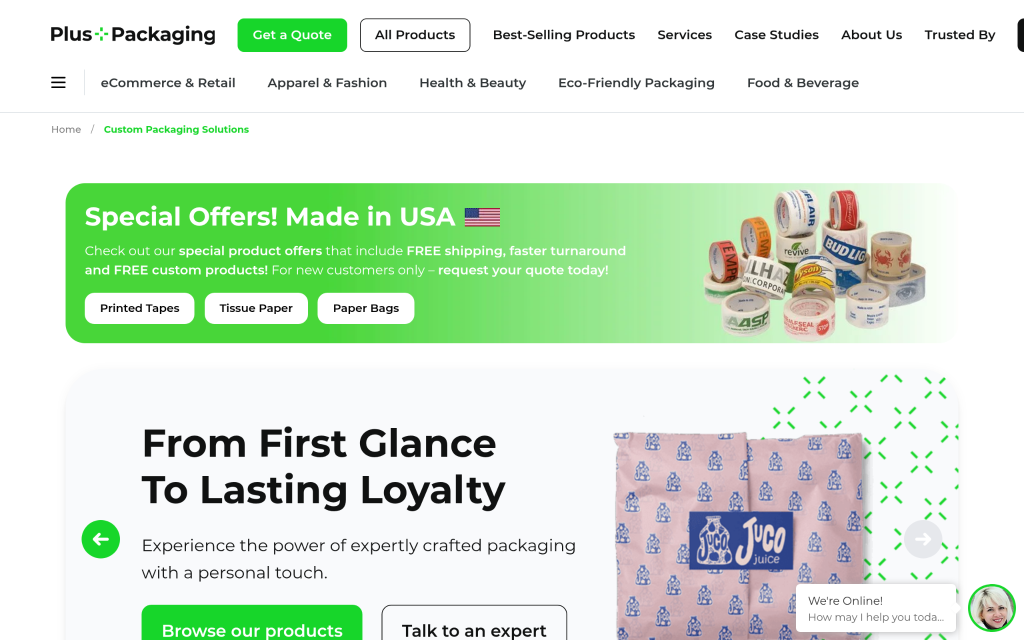
Plus Packaging has been supplying custom packaging since 1978, which means they’ve lived through decades of material shifts, printing technology changes, and evolving client demands. They cover poly mailers, kraft paper tape, printed boxes, tissue paper, labels, and packaging inserts. Compostable and recyclable material options are built right into the catalog, not treated as add-ons. What sets them apart is the service model: no automation, no bots, just real people guiding clients through the custom development process from concept to production.
Why Does Plus Packaging Stand Out for Top Packaging Companies?
Brands that want genuine creative input during the packaging development process often find that automated platforms leave them guessing. Plus Packaging’s human-led model means clients get real guidance at every stage. And that kind of hands-on attention is genuinely rare in a space that’s rapidly moving toward self-serve tools.
What Users Are Actually Saying:
Honestly, the feedback pattern here centers on the quality of the service relationship rather than just the product itself. Clients consistently point to the personal attention they receive and how easy it is to work through custom requests. From what the reviews show, the 50+ year track record gives buyers confidence they’re not working with a vendor that treats them like a ticket number.
- Arka – Best for Custom Packaging Procurement and Automated Inventory Management
How Does Arka Operate?
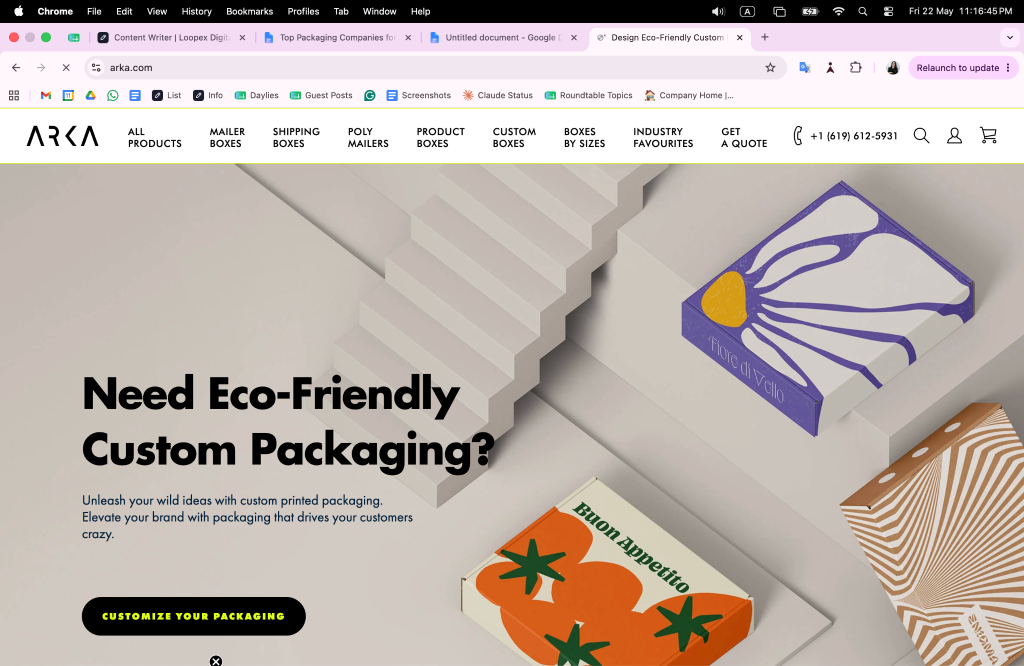
Arka runs as an API-powered platform designed to take the friction out of packaging procurement for warehouses and third-party logistics providers. Their system uses AI to automate inventory replenishment, matching orders to the nearest supplier in their network to keep lead times tight. Custom mailer boxes, shipping boxes, and product boxes are all made from sustainable materials. The platform includes real-time tracking dashboards and a straightforward customization interface, which makes it approachable even for teams without dedicated packaging experience.
Why Does Arka Stand Out for Top Packaging Companies?
Procurement teams managing high-volume warehouses deal with constant replenishment headaches. Arka’s automated matching system directly addresses that. What’s genuinely useful about their network model is that it keeps suppliers geographically close to fulfillment locations, which tightens delivery performance and cuts material transit costs at the same time.
What Users Are Actually Saying:
From what the data shows, users respond well to how quickly they can get from order placement to delivery confirmation. The real-time tracking feature gets mentioned regularly as a practical tool rather than a nice-to-have. Arka has also attracted backing from credible investors, including Republic, Plug and Play, and Stanford University, which shows they’re building toward something significant.
- Packlane – Best for Custom Packaging and Box Design for Brands
How Does Packlane Operate?
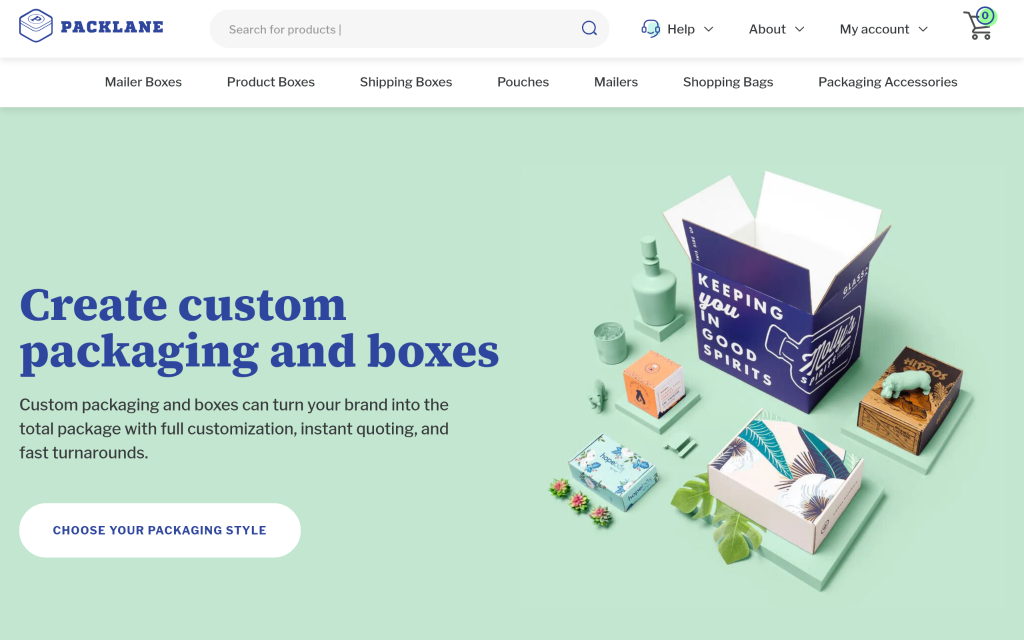
Packlane offers an online platform built around digital printing and custom box design, covering mailer boxes, shipping boxes, product boxes, and econoflex boxes. The 3D design tool is one of the stronger visualization features in this space (not just a simple preview, but a proper design-before-you-buy experience). Low minimum order quantities and a standard 10-business-day turnaround make them accessible for brands that aren’t ready to commit to large production runs. Rush production at 7 business days is also available. Eco-friendly options include recyclable materials and soy-based inks.
Why Does Packlane Stand Out for Top Packaging Companies?
Brands that need to test new packaging concepts without committing to large minimum orders often struggle to find a manufacturer willing to work with small runs. Packlane’s digital printing setup and low minimums directly solve that problem. And with 25,000+ brands on their client list, including Google, Red Bull, and Shopify, the production quality clearly scales.
What Users Are Actually Saying:
The 3D design tool consistently earns praise from users who want to see exactly what they’re getting before the print run starts. Real-time quote updates during the design process also get mentioned as a feature that removes a lot of the back-and-forth typical in custom packaging projects. That kind of transparency is hard to match across the broader market.
- Packhelp – Best for Custom Eco-Friendly Packaging for Small to Mid-Market Companies
How Does Packhelp Operate?
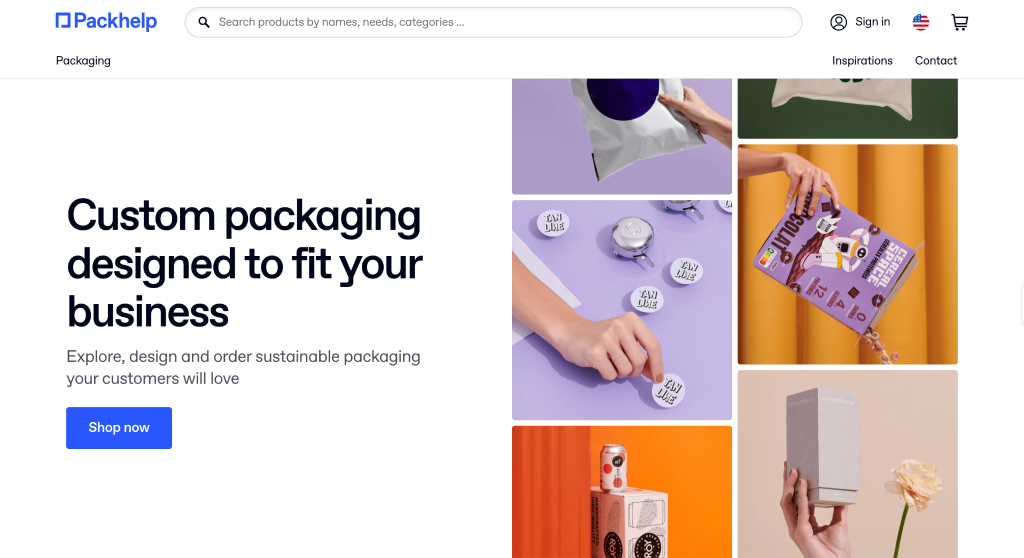
Packhelp runs a packaging platform built to serve both small businesses and growing mid-market brands, offering two distinct tiers to match order size and production needs. Packhelp Studio handles smaller orders starting at 30 pieces with a 14-day production window, while Packhelp Plus handles mid-market scaling needs. Their integrated online design tools remove the usual quotation delays that slow down custom packaging projects. The company has grown to serve over 50,000 companies globally, including BMW, H&M, Google, L’Oreal, and Uber (not cheap at the enterprise tier, but clearly capable at scale).
Why Does Packhelp Stand Out for Top Packaging Companies?
Small businesses trying to access custom packaging typically hit minimum order walls that make customization economically impossible. Packhelp’s 30-piece minimum breaks that barrier while still delivering sustainable packaging options that meet modern environmental requirements.
What Users Are Actually Saying:
Packhelp’s growth story speaks for itself. Being ranked first in the Deloitte Technology Fast 50 Central Europe isn’t a marketing claim you see everywhere, and it reflects genuine business momentum. From what the data shows, clients in the small to mid-market segment value the platform’s ability to scale with them rather than forcing a move to a different vendor as order volumes grow.
- Sticker Mule – Best for Custom Packaging and Merchandise Manufacturing
How Does Sticker Mule Operate?
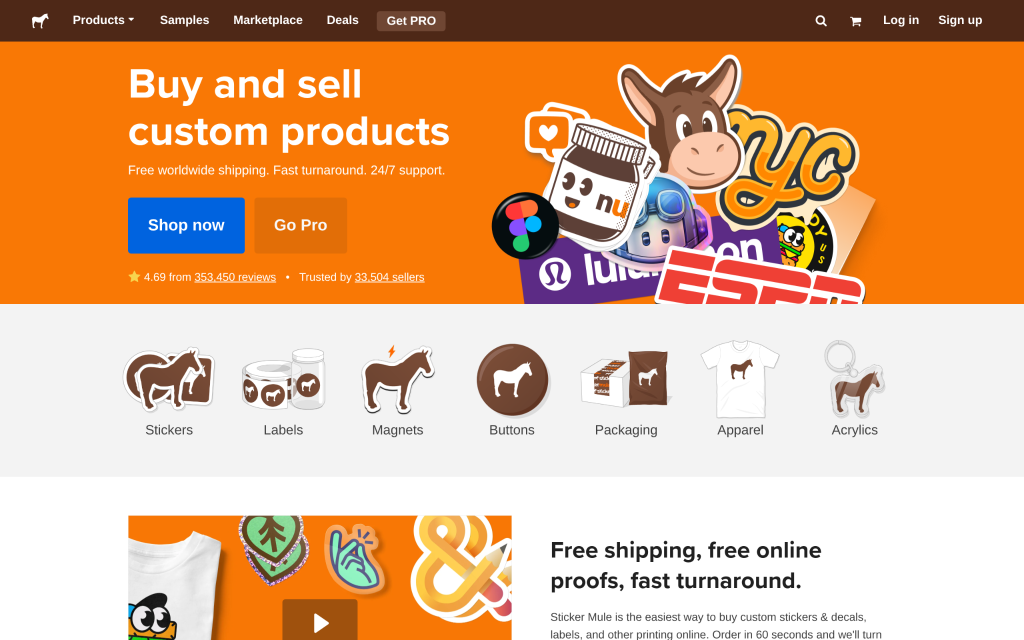
Sticker Mule operates manufacturing facilities in New York, South Carolina, and Italy, with a team of 1,200+ people spread across 30+ countries. Their product range goes well beyond stickers: custom labels, packaging, buttons, magnets, t-shirts, keychains, and more. What’s worth understanding about their production setup is the ability to run orders from 50 to 100,000 units without a dramatic shift in process. Free worldwide shipping with approximately four-day turnaround is baked into every order. They’ve also partnered with Epson on the 100th SurePress digital label press in North America, which reflects serious technology investment.
Why Does Sticker Mule Stand Out for Top Packaging Companies?
Brands sourcing custom packaging and branded merchandise from separate vendors often deal with inconsistent quality and mismatched lead times. Sticker Mule consolidates a wide range of custom products under a single production infrastructure, simplifying procurement and maintaining consistent quality across formats.
What Users Are Actually Saying:
Sticker Mule counts Amazon, Nike, Google, Netflix, and Microsoft among their clients, which tells you something meaningful about how they perform at volume. Internally, 71% of their staff rate it as a great place to work versus 57% at typical U.S. companies (per Great Place to Work data), and that kind of operational culture tends to show up in order accuracy and responsiveness. Honestly, that employee satisfaction signal is one worth paying attention to.
Methodology Behind These Picks
Gathering Information for Analysis
The research started by pulling together a broad list of packaging companies from multiple sources: industry directories, software review platforms, trade publications, and brand-submitted case studies. The goal at this stage was breadth, casting a wide net across company types, sizes, and geographic markets. Custom packaging providers, platform-based ordering tools, and full-scale manufacturers were all included in the initial pool. Each entry was documented with whatever publicly available data existed, including service descriptions, stated turnaround times, minimum order quantities, and material environmental claims from official websites.
The Shortlist Cut
Once the initial list was built, options with no verifiable production history or reviews were removed from consideration. The analysis looked at review patterns across multiple platforms rather than relying on a single source, watching for consistency in what customers mentioned most frequently. Companies where positive reviews were thin, unverified, or concentrated on generic praise without any product detail were deprioritized. What remained were companies with enough real-world feedback to draw meaningful conclusions about how they actually perform in production.
Fact-Checking the Picks
Each company’s stated capabilities were cross-referenced against what actual clients described in their reviews and case studies. Where a company claimed specific turnaround times or sustainable material options, those claims were checked against third-party commentary and production records wherever available. Any gap between what a company advertised and what customers reported was flagged during this stage. Companies that held up under that cross-check were carried forward.
Authority Signals and Industry Standing
Beyond reviews, each company was evaluated for broader recognition signals: awards from credible industry bodies, mentions in relevant trade and business publications, and evidence of original research or published production data. Packhelp’s Deloitte Technology Fast 50 ranking and Sticker Mule’s Epson partnership are examples of the kind of third-party validation that adds weight to a company’s stated positioning. These signals don’t replace operational evidence, but they do confirm that a company has earned attention from parties outside its own marketing team.
Top Packaging Companies Track Record
The final check focused on how deeply each company had demonstrated its focus on packaging manufacturing overall. This meant looking for dedicated service pages covering packaging formats, verified client reviews tied to packaging production outcomes, and case studies showing measurable results like on-time delivery rates, defect reduction, or eco-friendly material adoption. Companies with a clear, documented focus on packaging manufacturing across their materials were prioritized over generalist suppliers with packaging as one of many product categories.
Picking the Right Top Packaging Companies for You
Choosing between these five companies comes down to knowing what your production situation actually requires. Each brings a different set of strengths, and the right fit depends on your order volume, customization needs, and how much hand-holding you want during the design process.
- Industry/Domain Experience: Look for companies with demonstrated time in the packaging manufacturing space. Plus Packaging’s 46+ year track record and Sticker Mule’s multi-continent production infrastructure both signal deep operational knowledge. Newer platforms like Arka and Packhelp compensate with technology investment and funding credibility.
- Features and Service Options: Match the feature set to your workflow. Packlane and Packhelp offer strong self-serve design tools. Plus Packaging offers human-led creative guidance. Arka suits teams that need automated replenishment built into their supply chain.
- Pricing Structure: Minimum order quantities vary across this list. Packhelp starts at 30 pieces for smaller runs, while Sticker Mule scales to 100,000 units without breaking a sweat. Understand your volume before committing to a platform.
- Results Measurement: Ask each supplier how they report on defect rates, on-time delivery, and production output. Companies that track these numbers openly tend to perform better against them.
- Industry Knowledge and Compliance: For regulated product categories like food-grade or pharmaceutical packaging, confirm that the supplier understands FDA 21 CFR and EU Regulation 1935/2004 requirements before placing your first order.
The Verdict
Packaging is not a background purchasing decision anymore. The companies on this list each bring something specific to the table, whether that’s decades of hands-on experience, automated procurement tools, or low-minimum customization. The best fit depends on your production scale, environmental requirements, and how much creative support you need. As environmental regulations tighten and e-commerce packaging demands keep shifting, working with a supplier that knows the space will matter more, not less.