Outcomes, Not Just Actions
An AI agent can appear to complete a task successfully while producing the wrong business result. Enterprise testing must verify what actually happened across systems, permissions and approval rules.
Understand Impact Before Change
Connected business processes require shared context. Understanding how changes affect applications, data and controls helps teams focus testing on the risks that matter.
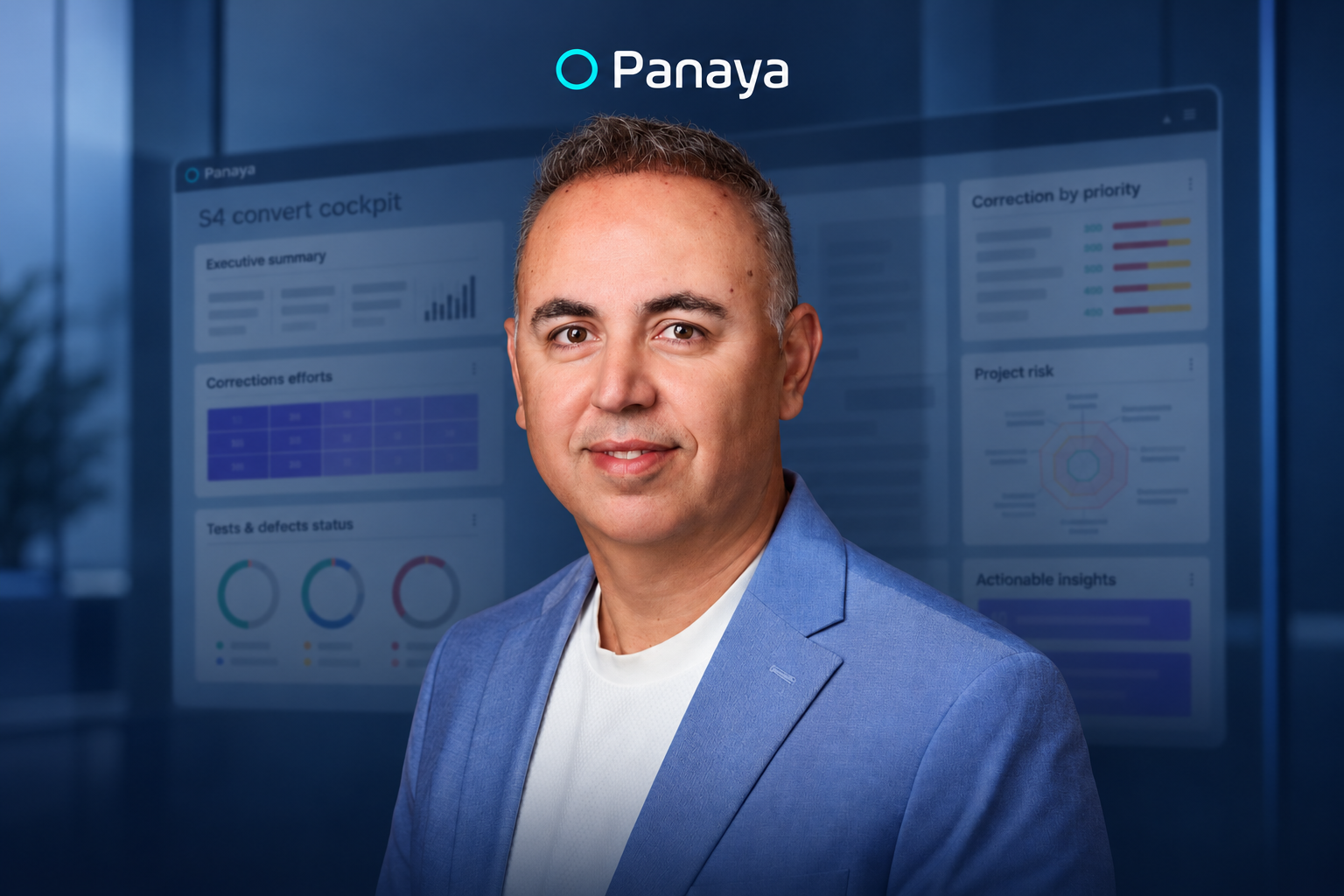
In this ERP News Q&A, David Binny discusses the evolution of enterprise testing and why greater autonomy requires reliable evidence, clear boundaries and accountable release decisions.
Defining the Autonomous Enterprise
Q: The idea of the autonomous enterprise is moving quickly from vision to product strategy, particularly across ERP and other business-critical applications. What does an autonomous enterprise mean to you in practical terms, and how close are large organizations to operating this way today?
A: An autonomous enterprise is not one that operates without people. It is one that can safely delegate defined business responsibilities to intelligent systems while people continue to set direction, establish boundaries, and remain accountable for the outcomes.
The level of authority matters. An agent reading an order status is very different from one creating a supplier, changing payment terms, or releasing a payment. Each step introduces a different level of business risk.
Most organizations are still at the beginning of this transition. They are introducing agents into contained processes, but few have consistent standards for deciding what an agent may do, what evidence it must provide, and when a person must intervene.
The organizations that progress fastest will not necessarily be those that pursue autonomy most aggressively. They will be those that build trust progressively, qualify agents for specific responsibilities, and expand their authority as the evidence supports it.
Moving Beyond Traditional Test Automation
Q: Panaya argues that the autonomous enterprise cannot be supported by traditional testing alone. What fundamentally breaks in the conventional testing model when AI agents begin making decisions and executing work across ERP, CRM, and other enterprise applications?
A: Traditional testing assumes relatively predictable behavior: provide the same input, follow the same process, and expect the same output. AI agents challenge that assumption. Their responses can differ and still be correct or appear convincing while producing the wrong business outcome.
That distinction matters in enterprise systems. If an agent applies the wrong payment term, skips an approval, or assigns inappropriate access, the process may appear to have completed successfully. The failure might only become visible at quarter close, during an audit, or after money has moved. Business processes often fail silently.
Testing therefore cannot stop at evaluating what the agent said or intended to do. It must verify what actually happened in the systems of record, whether the agent respected its permissions and approval rules, and whether it stopped when it encountered uncertainty. This requires testing built around business outcomes, risk, boundaries, and exceptions. Not only predefined scripts.
Q: Test automation has been evolving for years, but autonomous testing suggests something more significant than automating test execution. Where do you draw the line between automated testing, AI-assisted testing, and genuinely autonomous testing?
A: Automated testing executes instructions that people have already defined. It can run the same tests repeatedly and efficiently, but it does not independently understand why those tests matter.
AI-assisted testing goes further. It helps people generate tests, analyze results, maintain automation, and identify patterns, while the user continues to orchestrate most of the process.
Autonomous testing begins when the platform can understand the objective and surrounding business context, determine what changed, assess what is affected, prioritize the relevant risk, generate or adapt the required tests, autonomously execute and validate them, and determine the next action within established controls.
The business value is straightforward: teams can reduce unnecessary testing, eliminate much of the effort spent creating and maintaining scripts, and support more releases without adding equivalent headcount.
Autonomy does not mean removing people. It means delegating more of the work without delegating accountability. The platform handles scale, complexity, and repetitive decisions. People establish priorities, define acceptable risk, approve consequential outcomes, and intervene when judgment is required.
Establishing Trust and Human Oversight
Q: As organizations give AI agents greater authority, how do they establish trust—and which decisions should remain subject to human approval?
A: Trust should not come from how convincing an agent sounds. It should come from evidence that the agent can perform a defined business task, within approved limits, under realistic conditions. I think of that as qualification.
Organizations need to define what the agent may do, what it must never do, when it must escalate, and which outcomes must be verified before it receives production authority. That evidence should come from the systems where the work happens, not simply from the agent’s account of its actions.
The level of human control should correspond to the potential consequence. Retrieving information may require limited oversight. Changing sensitive master data, approving financial activity, or affecting regulated processes requires stronger controls and explicit accountability.
When policy is ambiguous, evidence is incomplete, or the potential impact is material, the agent should not guess. It should stop, explain the uncertainty, and ask for a decision.
Managing Change Across Connected Enterprise Systems
Q: Enterprise processes rarely live inside a single application. A seemingly small change in SAP, for example, can affect CRM, procurement, finance, and connected applications. How does this complexity change the way enterprises should approach testing and change impact analysis?
A: The business process—not the individual application—must become the unit of quality.
A quote-to-cash process may begin in a CRM platform, continue through SAP, interact with tax or payment systems, and finish in reporting. Testing each application independently can show that every component works while still missing a failure in the end-to-end process.
That is why Change Impact Analysis must provide the factual foundation for testing. Before executing anything, organizations need to understand how a change moves across code, configurations, integrations, data, and business processes. Only then can they determine what needs attention, what should be tested, and what can safely be skipped.
It also means change impact analysis, test management, automation, and remediation cannot operate as separate islands. They need shared context and one source of truth. That is the principle behind Panaya’s platform: understand impact first, then use that context to fix, test, and guide everything that follows.
Q: Enterprises will increasingly use AI agents to test systems and processes that are themselves being operated or changed by AI agents. Does this create a new category of risk, and what governance is needed when AI is validating the work of other AI?
A: It creates a new governance challenge, but the answer cannot be to rely on one AI model’s judgment of another.
Organizations need different forms of evidence. Critical outcomes involving money, access, master data, or approvals should be verified through hard checks against the relevant systems of record. More subjective outputs can be evaluated through a reasoning layer, but that layer must be calibrated against human-verified examples and governed acceptance criteria.
There must also be separation between execution and approval. An agent should not be able to perform an action, declare it successful, and independently accept the remaining risk.
Qualification cannot be permanent either. A model update, application release, permission change, or altered business rule can invalidate the original evidence without producing an obvious failure. Every relevant change should trigger an impact decision, followed by targeted requalification of the affected behavior. This avoids forcing teams to retest everything after every change, making continuous assurance practical at enterprise speed.
AI can help produce and evaluate evidence, but it should never lower the organization’s acceptance standards on its own.
Balancing Transformation Speed and Risk
Q: Many enterprises are simultaneously managing major ERP transformations, cloud migrations, continuous releases, and pressure to adopt AI. Can autonomous testing genuinely reduce transformation risk and release cycles, or could greater automation encourage organizations to introduce change faster than their governance can absorb?
A: Autonomous testing can reduce both risk and cycle time, but only when governance evolves alongside it. Speed without visibility simply allows an organization to create problems faster.
By automatically identifying what changed, prioritizing business-critical risk, and focusing testing where it matters most, organizations can reduce manual effort, shorten release cycles, and protect critical business processes as the pace of change increases.
Governance must also be proportionate. Requalifying every process after every update would eventually bring delivery to a halt. Ignoring the effect of change would expose the business to unacceptable risk. Change Impact Analysis provides the practical middle ground: understand what was affected and retest the relevant processes, controls, and agent behaviors.
Automation should remove repetitive work and improve the quality of release evidence. It should not allow teams to bypass accountability.
Q: If autonomous testing delivers on its promise, how will the role of QA and enterprise testing teams change? Do you expect these teams to become smaller, or will their value shift?
A: Their value will shift significantly. I do not believe the most important outcome is simply smaller teams. It is teams with far greater capacity and a more strategic role.
A large amount of testing effort is still consumed by administration, coordination, script maintenance, documentation, and repetitive execution. As intelligent agents take on more of that work, quality teams can concentrate on business risk, end-to-end process coverage, governance, and the difficult exceptions that require human judgment.
The strongest quality professionals will increasingly combine technical understanding with knowledge of how the business operates. They will define risk policies, oversee autonomous workflows, challenge recommendations, and ensure that critical processes remain protected as the enterprise changes.
Quality engineering will become less focused on how many tests were executed and more focused on whether the organization has sufficient evidence to make a safe release decision.
The Future of Continuous Enterprise Qualification
Q: Looking three to five years ahead, what will enterprise testing look like when agentic AI is embedded across ERP and other core business systems? Will testing remain a distinct stage, or become a continuous intelligence layer operating alongside the enterprise?
A: Testing will become more valuable as a continuous qualification layer for the autonomous enterprise. There will still be explicit release decisions and human approvals for high-risk changes. But much of the work leading to those decisions: understanding impact, determining scope, generating and maintaining tests, executing validation, and collecting evidence, will happen continuously and increasingly autonomously.
Testing platforms will also retain organizational memory: what changed, why it changed, what was tested, what failed previously, and how similar risks were handled. That context will become essential as enterprise environments grow more complex and experienced specialists become harder to replace.
This is the vision behind Panaya’s agentic platform and Seemore: one intelligent platform connecting Change Impact Analysis, Test Management, Test Automation, and Custom Code Correction. By bringing these capabilities together with shared business context, we enable enterprises to understand what matters, test what matters, and accelerate change with confidence.
The autonomous enterprise will require autonomous testing, but autonomy must always operate within boundaries defined by people.
Editorial Takeaway
The autonomous enterprise needs a dependable way to establish whether intelligent systems can be trusted with specific business responsibilities. That trust must rest on verified outcomes, clear authority and evidence from the systems where work actually happens.
David Binny’s perspective makes the business process the unit of quality. Applications may work individually while the connections between them fail. Understanding change impact is therefore essential to deciding what needs testing and which risks require attention.
As AI agents take on more execution, assurance must remain independent. An agent should not perform an action, declare it successful and accept the remaining risk by itself. Human accountability and governed acceptance criteria remain fundamental.
Qualification must also evolve with the enterprise. Changes to models, applications, permissions and business rules can invalidate earlier evidence. Targeted requalification helps teams respond without repeating every test after every update.
This gives quality teams a more strategic role, centred on business risk, process coverage and safe release decisions. Their value increasingly lies in the strength of the evidence they provide.
Testing is becoming a continuous source of enterprise intelligence, preserving context and helping organisations accelerate change with confidence.
TRUST IN AUTONOMY DEPENDS ON VERIFIED OUTCOMES, CONTINUOUS QUALIFICATION AND HUMAN ACCOUNTABILITY.

ERP News Editorial Team
The ERPNews Editorial Team covers global developments in ERP (Enterprise Resource Planning), enterprise software, cloud platforms, AI, automation, and digital transformation, providing independent news and editorial analysis for senior business and technology leaders. Our reporting focuses on market signals, strategic shifts, and enterprise impact across the ERP and enterprise technology ecosystem.
For editorial inquiries, please contact:
📩 [email protected]