
Driving through Southern California usually means keeping one eye on the road and the other on the massive commercial trucks weaving through traffic. Most of us have felt that rush of wind as a semi-rig flies past on the freeway, but we rarely think about the extreme physics involved until something goes wrong.
When these 80,000-pound vehicles collide at high velocities, they leave behind a complex trail of digital and physical evidence. If you’ve ever seen a wreck in Los Angeles and wondered how to prove who was at fault, the answer lies in the details. A specialized perspective is needed to find the proof that a driver was pushing their rig far beyond safe limits.
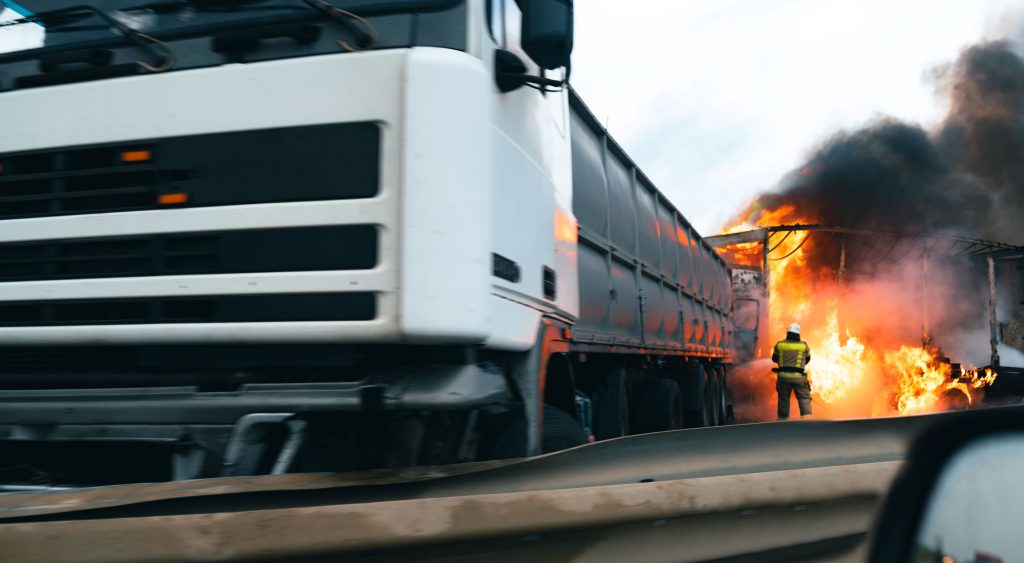
1. Analyzing the Severity of Vehicle Deformation
High-speed collisions generate a large amount of kinetic energy, resulting in specific types of structural damage that experts can analyze to determine speed. In accident reconstruction, this analysis is often associated with energy equivalent speed, which helps experts estimate the force involved in the crash based on vehicle deformation. In these cases, you will often see “crush zones” and severe frame warping that simply do not occur in low-speed accidents. A lawyer works with engineering experts to analyze how the metal crumpled, as the depth of the deformation can reveal the truck’s exact speed.
When the impact is powerful enough to push an engine into the cabin or twist a heavy vehicle frame, it is a clear sign of excessive velocity. These physical indicators are vital for proving that a driver was traveling too fast for road conditions. By measuring the distance vehicles traveled after the hit, experts can reconstruct the force involved in the crash.
2. Securing All Digital Evidence
Modern trucks are equipped with advanced onboard computers and GPS logging devices that record every second of a trip. This digital trail includes hard-braking events, throttle positions, and precise speed data from the moments leading up to an impact. However, this information can be overwritten in a matter of weeks if a legal professional does not act quickly to preserve it through a formal letter of protection.
Securing this data is a critical step for anyone dealing with the aftermath of hide speed truck accidents in Los Angeles CA, as it provides the hard proof needed to counter the truck driver’s claims. Instead of your word against theirs, you have digital facts that cannot be argued away in court. For example, people who opt for Pacific Attorney Group focus on tailoring every strategy to specific crash-site data for the best possible outcome. This specialized focus ensures that your claim stands up against aggressive corporate defense teams who try to downplay the severity of the speed involved.
3. Evaluating Skid Marks and Road Scars
The asphalt itself acts as a witness to a high-speed collision, holding clues in the form of skid marks and deep gouges. Long, dark marks often indicate that a driver attempted to brake but was moving too fast to stop in time. In some cases, a complete lack of skid marks suggests the driver didn’t even have time to react before the impact.
- Yaws and offset skids: These marks show if the truck began to rotate or slide sideways before hitting another vehicle.
- Debris field spread: Higher speeds scatter heavy car parts over a much larger area than a typical fender-bender.
- Impact Gouges: These are deep marks in the road caused by heavy metal machinery hitting the ground with extreme force.
4. Leveraging Dashcam and Third-Party Video
In a city like ours, there is almost always a camera recording the road, whether it is a dashcam or a business security system. A lawyer will track down this video evidence to provide a visual record of the truck’s movements before the crash, which can be crucial for proving liability.
Video experts use a process called photogrammetry to calculate speed by measuring how fast the truck passes fixed points, like light poles or signs. This transforms a simple video into a powerful scientific tool for your case. Finding footage from the minutes before the accident can also show a pattern of reckless driving that led to the collision.
5. Recognizing the Impact of Cargo Shifts
When a heavy truck maneuvers at high speeds, the momentum can cause the cargo inside to shift violently. This shift often leads to jackknifes or rollovers, which are dangerous accidents that are much rarer at lower speeds. If the cargo wasn’t secured properly, the force of high speed makes an already risky situation completely deadly.
- Uneven Trailer Tilt: This is often proof that weight shifted dangerously during a high-speed turn or sudden lane change.
- Broken Tie-Downs: These indicators show that the sheer force of speed snapped heavy-duty restraints designed to hold the freight.
- Cargo Position: Where the freight ended up after the crash reveals the direction and intensity of the initial force.
Conclusion
Proving that speed was a factor is often the most important part of a successful legal claim. Recognizing these signs requires a mix of high-tech tools, expert analysis, and a deep understanding of the law. You do not have to be a physics expert to get justice; you just need a team that knows where to look for the truth. Reach out for a consultation today to protect your rights and your future.