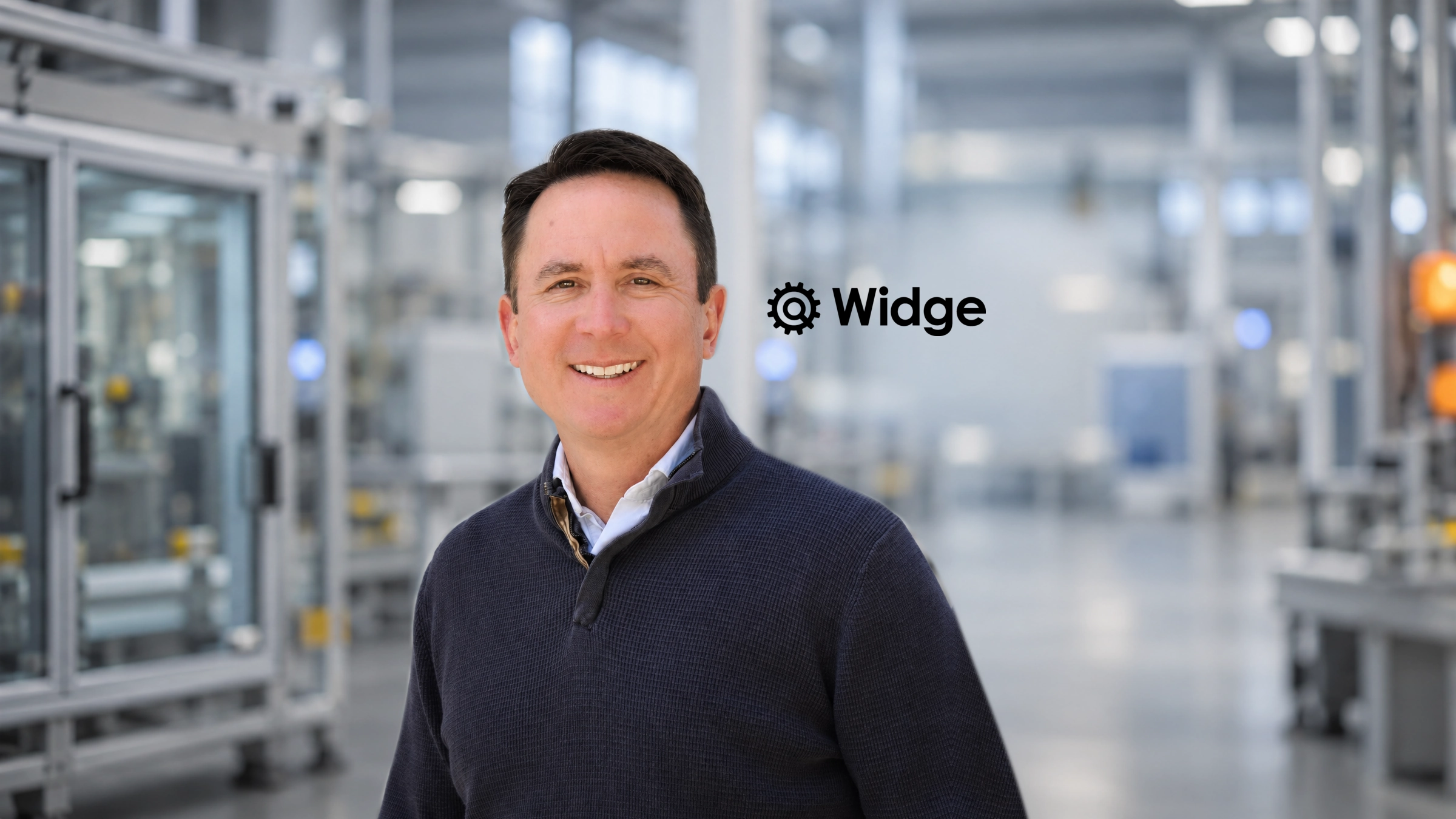
In this ERP News Executive Q&A, Eric Okimoto, Founder and CEO of Widge, explores how AI can preserve manufacturing expertise, connect technical documentation with ERP and CRM data, and expand workforce capacity while keeping people in control of consequential decisions.
KNOWLEDGE AT THE POINT OF WORK
As experienced employees retire, manufacturers face the challenge of preserving the expertise behind everyday decisions. Okimoto explains how AI can make product knowledge, technical documentation and operational information accessible to more employees, helping them answer complex questions without losing sight of the judgment and relationships that remain human.
GREATER CAPACITY, CLEAR ACCOUNTABILITY
Connecting knowledge across enterprise systems can shorten the path from a customer inquiry to an accurate answer or prepared order. The conversation examines the boundaries that make this useful in manufacturing: traceable sources, controlled access, human approval and measurable improvements in responsiveness, order processing and employee productivity.
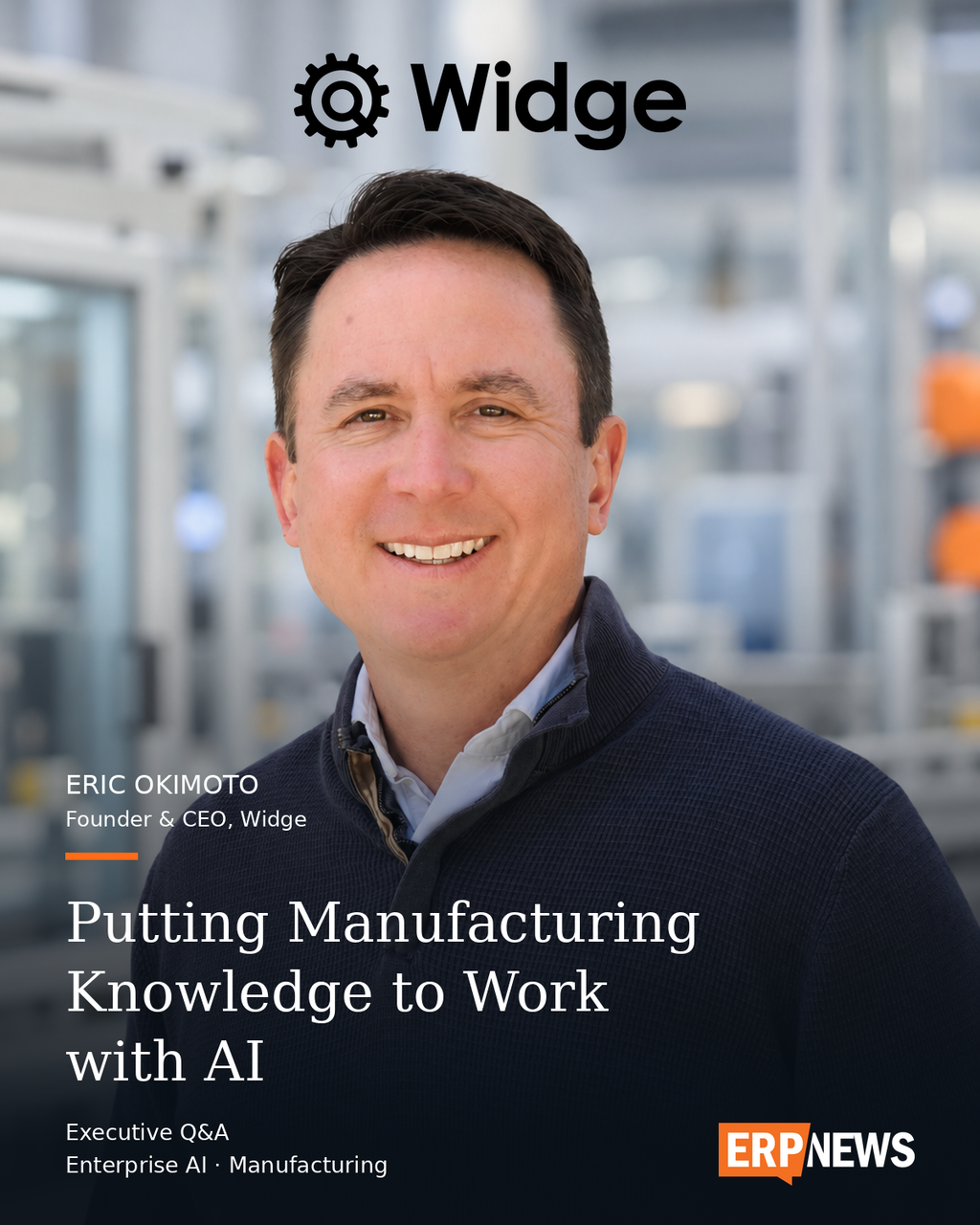
Eric Okimoto is the Founder and CEO of Widge, an AI platform for industrial manufacturers. He brings more than 20 years of enterprise software experience, with AI and machine learning as his focus since the mid-2010s.
His background includes senior product roles at SugarCRM and co-founding boodleAI, where he served as Head of Product.
A West Point graduate and former U.S. Army Infantry Officer, Eric holds an MBA from the University of Cambridge. His research on knowledge management and innovation continues to shape Widge’s mission.
AI should be powerful but never unchecked. That’s why we build in clear permissions, visibility, human oversight, and safeguards — so teams can benefit from AI while keeping their systems and data secure.
Q: Manufacturers have been talking about skilled labor shortages for years, but the challenge is increasingly becoming one of knowledge and capacity as experienced employees retire. From your perspective, how is this changing the role AI needs to play in the manufacturing workforce?
Eric Okimoto: The issue is no longer simply whether manufacturers can hire enough workers, it’s whether they can preserve and scale the knowledge and performance of the workers they already have.
Manufacturing organizations have accumulated decades of expertise across engineering, production, sales, service, procurement and quality. Much of that knowledge resides with experienced employees who know where to find information, how different systems relate to one another, and how to interpret technical information in the context of a specific customer or operational problem.
We hear this from customers all the time: 65-year-old Bob is finally retiring and taking all of his product and customer knowledge with him. It isn’t written down anywhere. It’s in his head. Most companies approach this as “we need to hire Bob’s younger replacement,” or, if technology is the focus, “we need to implement SharePoint.”
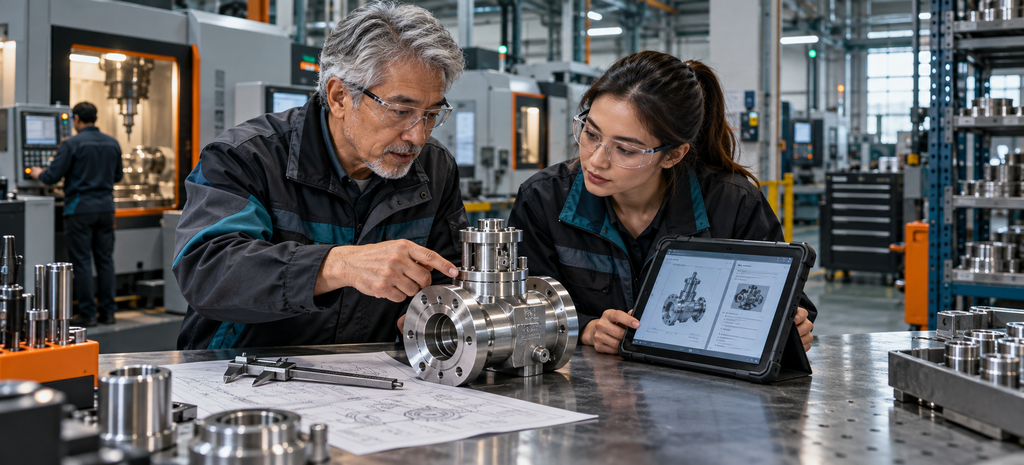
AI has the potential to capture and store that knowledge quickly and simply, without placing a huge burden on the organization. Done properly, AI can give your entire workforce the expertise and skills of Bob, amplifying the capacity of the existing workforce by making enterprise knowledge available to more people, more quickly.
That changes the objective from merely automating individual tasks to giving employees access to the accumulated knowledge of the organization at the moment they need it.
Q: A significant amount of manufacturing expertise still exists as “tribal knowledge” — held by experienced employees rather than captured in formal systems. Can AI realistically preserve and transfer that knowledge to the next generation, and where are the limits?
Eric Okimoto: Absolutely. A good AI system makes it easy to capture tribal knowledge and even learns from your employees, while also protecting your data. The challenge is choosing a vendor, or building something yourself, that doesn’t simply train an LLM on your business and create new problems in the process. No one fully understands how big tech companies use inputs to train their models. Manufacturers have to treat their proprietary knowledge as something to be protected, not just uploaded.
There are also real limits to what AI can preserve. Judgment developed through decades of experience cannot simply be converted into a database overnight, and manufacturers should be skeptical of claims that AI can completely replace that expertise.
Bob’s product knowledge can be captured: which part fits which application, what the workarounds are, what the notes in the margins of the catalog mean. What’s much harder to capture is Bob’s tacit knowledge of the customer. He knows which buyer needs a phone call instead of an email, which plant manager will accept a substitute part and which one won’t, and when a “we’re fine” on a call actually means there’s a problem brewing. That kind of judgment is built over years of relationships, and no technology can truly understand or master it. AI can make sure the next generation starts with everything Bob knew about the products. The relationships, they still have to earn themselves.
A better goal is knowledge amplification. AI can make documented expertise easier to find, connect information that previously required an experienced employee to assemble manually, and help newer employees get up to speed faster from the accumulated knowledge of the organization. Human expertise remains essential, particularly when decisions involve ambiguity, safety, unusual operating conditions or consequences outside the system’s established knowledge.
Q: ERP systems contain enormous amounts of operational intelligence, yet employees often still have to move between ERP, CRM, product documentation, spreadsheets and experienced colleagues to answer a single customer or technical question. Why has connecting these sources of knowledge remained so difficult?
Eric Okimoto: Manufacturing technology evolved around specialized functions rather than around a single enterprise information model.
ERP manages transactions and resources. CRM manages customer relationships. PLM and CAD manage product and engineering information. MES manages production. Other systems manage supply chain, quality and service. Each was designed to solve a particular problem, often at a different point in the company’s history.
The result is not necessarily a shortage of information — it’s fragmentation.
A seemingly simple question — whether a particular product configuration is compatible, available and appropriate for a customer — may require information from several systems plus a technical manual or specification sheet. An experienced employee effectively performs the integration manually by knowing which systems to consult and how to reconcile what they find.
Technically, it’s possible to unify data, creating a common intelligence layer capable of retrieving and interpreting the relevant information across them. However, companies have been slow to embrace AI for this purpose. There is still a huge trust deficit, and for good reason. The headlines are all about an AI apocalypse, and it’s hard for people to distinguish between narrow AI operating within guardrails and “the Terminator.”
A good AI system (harness) should have well-managed agents in a box, secure data, and humans in the loop, with an easy-to-use interface that automatically prepares ERP and CRM data for human review, solves difficult customer questions, and brings the data to the user rather than making the user do the work.
FROM TECHNICAL DOCUMENTS TO CONNECTED INTELLIGENCE
Q: Much of the conversation around enterprise AI assumes that company data is ready for AI to use. In manufacturing, however, critical information often sits inside PDFs, technical manuals, specification sheets, product catalogs and legacy documents. What makes this kind of unstructured technical information particularly challenging for general-purpose AI?
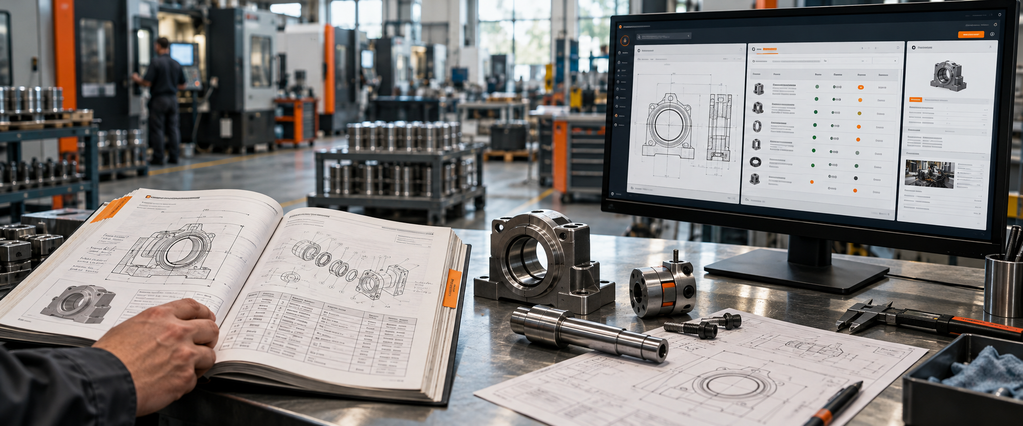
Eric Okimoto: General-purpose AI simply isn’t built for manufacturing. It typically relies on generic OCR or standard PDF-to-text libraries that struggle with CAD diagrams, schematics, and complex tables. We use a purpose-built pipeline that draws on the best LLM for each task to process technical documentation. A good AI system shouldn’t require a lot of setup work. It should be “bring your data as-is, and the system does the rest.”
This is an area Widge has focused on specifically — creating a data abstraction layer capable of working with manufacturing information such as product documentation, PDFs and schematics, and connecting that information with operational systems.
Q: Widge describes an approach in which AI can retrieve information across documents, ERP and CRM systems simultaneously, rather than treating each as a separate source. What changes when AI becomes a layer across enterprise systems instead of another standalone application employees have to use?
Eric Okimoto: Think of it as a Claude- or ChatGPT-style experience for your employees and customers, but connected to your systems. We’ve heard of companies trying to build this themselves, and when you pull back the curtain, you usually find agent-management issues, much higher costs, security issues, and a significant drain on the organization’s time. We’re providing the “easy button” for mid-market manufacturers: they don’t have to think about it, but they get that integrated experience at a reasonable cost. Our goal is for customers to log into their CRM or ERP only for administrative needs, with all day-to-day tasks handled in Widge.
The paradigm shift is that an employee no longer has to understand where the information lives in order to find that information and make use of it.
Today, experienced employees are forced to function as human integration layers. We’ve all heard of “swivel-chair integration.”
If you’re lucky, that employee knows which system to open, which document to locate, which spreadsheet contains additional information, and which colleague to call when something is missing, questionable, or doesn’t reconcile.
When AI can operate across those systems, the interaction can start with solving the business question rather than determining the right application to access.
That is a significant change in enterprise computing. The systems of record remain important, but employees become less dependent on understanding the mechanics of every system and even entering in the necessary keystrokes in order to access the knowledge contained within them.
Q: There is an important difference between an AI assistant that answers a question and one that can take action — for example, checking inventory, initiating an order or passing a transaction back into an ERP system. As manufacturers move from AI assistance toward execution, where should the boundaries of autonomy be drawn?
Eric Okimoto: Good question, and one we’ve debated at length. Our philosophy is to always keep humans in the loop and never create direct surface area for agents to interact with a manufacturer’s critical systems of record (Agents in a box). Our agents handle the busy work, but real people still review, approve, and process. This ultimately comes down to risk management. There is some opportunity for agents to fully and autonomously handle low-risk tasks (for example, sending an email response about an order status), but the industry is still working through the change-management side of this.
AI autonomy must be proportional to the consequences of those decisions.
There is a major difference between retrieving an inventory balance and committing inventory, between preparing an order and releasing it, or between identifying a potential compatibility issue and authorizing a technical substitution.
Low-risk, deterministic actions can increasingly be automated. Higher-consequence actions should incorporate defined business rules, permissions and human approval. The system should also maintain an auditable record of what information was accessed, what action was proposed or taken, and under whose authority with a monitoring system for flagging issues.
The important principle is that AI should not receive more authority simply because the technology is capable of taking an action. Authority should be intentionally granted based on the operational and financial consequences of that action.
“Our agents handle the busy work, but real people still review, approve, and process.”
ERIC OKIMOTO
Q: Accuracy carries a very different risk in manufacturing than it does in many general knowledge use cases. A plausible but incorrect answer about product compatibility or a technical specification can have real operational consequences. What does “trustworthy AI” need to look like in an industrial environment?
Eric Okimoto: Trustworthy AI must be accurate and precise. It must be tested. It must be auditable and continually reviewed. Agents must offer traceability in their recommendations and actions. Too many AI and ERP companies launching AI products are taking a “throw it out there and let the customer figure it out” approach. That is going to get a lot of manufacturers in trouble, and they need to be aware of the risks.
A trustworthy industrial AI system should be able to recognize when the available information is incomplete, conflicting or outside its knowledge boundaries. In those situations, the correct behavior is to escalate to a person — not generate the most plausible answer.
Traceability also matters. Organizations should increasingly expect AI systems to show where critical information came from so employees can verify specifications, compatibility information or other consequential answers when necessary.
The standard for industrial AI therefore needs to be different from the standard for a consumer chatbot. Reliability, bounded behavior, traceability and intelligent escalation are fundamental design requirements.
SECURE AI, MEASURABLE MANUFACTURING IMPACT
Q: Security is another concern when an AI layer can access ERP, CRM, technical documentation and potentially sensitive customer or product data. What governance and access controls should manufacturers insist on before allowing AI to work across these systems?
Eric Okimoto: When evaluating an AI company, it’s important to distinguish between “AI wrappers” (essentially a front end on Copilot, Claude, or ChatGPT) and a real Agentic AI harness that protects your data and masks it from the large LLMs. Every AI company uses some sort of LLM. The good ones use multiple LLMs, including self-hosted open-source models, and route each query based on complexity, cost, security, and data sensitivity.
Agentic governance and access controls are paramount. As I mentioned, we don’t give our agents direct access to systems of record; we provide them with tools and monitor their actions.
I heard a horror story from a large, well-known tech company in which agents working together on a task exchanged admin credentials to get it done, despite not having been granted that level of access. Needless to say, the outcome was a huge mess for that business. This new problem space will probably keep the big consulting firms in business for years.
At Widge, we isolate customer environments and don’t use one customer’s information to train another customer’s AI. Enterprise deployments can also be configured on premises where data-governance requirements call for information to remain within the customer’s own infrastructure.
Q: Many enterprise AI pilots demonstrate that the technology can answer questions, but that does not necessarily mean they create measurable business value. Which outcomes should manufacturing leaders track to determine whether an AI initiative is genuinely increasing workforce capacity rather than simply adding another technology layer?
Eric Okimoto: The outcomes manufacturing leaders need to track are the same ones they should be tracking today, with or without AI: customer responsiveness, customer satisfaction, and operational efficiency. What it should change is the impact, and those numbers are measurable. A few we watch closely with our customers:
- Time from a complex customer inquiry to accurate configuration and quote, including availability, lead time, and price
- Hours per week sales and customer service staff spend manually entering orders that arrive by email or PDF
- Percentage of customer and technical questions resolved on first contact, without escalating to an experienced colleague
- Ramp time for a new hire to handle questions independently
- Customer Satisfaction
- AR Balance and Collections
- EBITDA and Revenue Growth
Those metrics map directly to the pain we hear about most. Clients tell us their inside staff and their customers struggle to find the right part for the right application, and even when they do, they don’t know whether it’s available, what the lead time is, or what it costs. Sales teams tell us how much time order entry consumes. And nearly every customer has tribal knowledge locked in catalog notes and in the heads of a few experienced employees, with no plan for what happens when those people leave and support cycle times, first-response and first-resolution rates, error and rework rates, and the number of cases an employee can successfully handle.
If you introduce AI and those numbers don’t move, something is wrong. It’s either the wrong tool or the wrong implementation, and either way you’ve added a technology layer instead of capacity.
Q: Looking three to five years ahead, how do you expect the relationship between workers, AI and ERP systems to evolve on the manufacturing floor and across functions such as sales, service, procurement and supply chain? Will employees still primarily operate ERP applications themselves, or will AI increasingly become the interface through which work gets done?
Eric Okimoto: People aren’t going away. They will simply get much more done because the busy work will be handled for them. No one buys anything that matters from an AI; people still value relationships.
ERP vendors are working on their own AI interfaces, but large tech companies are notorious for slow development – I’ve been there. The challenge for ERP companies is that their legacy systems constrain their evolution. AI-native solutions are built differently: rather than being “configured and customized,” the AI handles that for the user. Agents no longer need complex business-process modeling; they can work from an SOP written in plain English. The game is changing. While it’s hard to predict exactly what that means for ERP systems, I suspect it will involve a lot of industry change over the next three to five years.
The larger shift is from application-centric work to intent-centric work. Instead of employees learning how to navigate every system required to complete a task, they increasingly describe what they need to accomplish while AI coordinates information and workflows across the systems underneath.
For manufacturers facing both workforce constraints and the retirement of experienced employees, this is particularly significant. Competitive advantage will not come simply from having AI. It will come from how effectively a manufacturer can connect its operational data, technical knowledge and human expertise — and make all three usable at the point where work actually happens.
ERP NEWS EDITORIAL TAKEAWAY
Eric Okimoto’s perspective places workforce capacity at the centre of manufacturing AI. The opportunity is to preserve accumulated expertise and make it available where employees need it, while reducing the routine work that consumes their time.
As experienced workers retire, capturing product knowledge becomes increasingly important. AI can help newer employees access documented expertise, but judgment, customer relationships and an understanding of unusual situations still require human experience.
Connecting technical manuals, catalogs and schematics with ERP and CRM information can make that knowledge more useful. Employees can begin with a business question rather than assembling an answer across disconnected applications.
Manufacturing also demands clear limits on execution. Preparing an order and releasing it carry different consequences. Permissions, human approval, traceable sources and escalation should reflect the risk of each decision.
Security and measurable outcomes belong in the same conversation. Protected knowledge creates a foundation for adoption; faster accurate quotes, less manual order entry and shorter onboarding times demonstrate whether AI is actually increasing capacity.
The emerging interface may change how employees interact with enterprise systems, but the strategic objective remains practical: connect operational data, technical knowledge and human expertise so people can serve customers and complete work more effectively.
MANUFACTURING AI CREATES VALUE WHEN CONNECTED KNOWLEDGE EXPANDS HUMAN CAPACITY UNDER CLEAR CONTROL.

ERP News Editorial Team
The ERPNews Editorial Team covers global developments in ERP (Enterprise Resource Planning), enterprise software, cloud platforms, AI, automation, and digital transformation, providing independent news and editorial analysis for senior business and technology leaders. Our reporting focuses on market signals, strategic shifts, and enterprise impact across the ERP and enterprise technology ecosystem.
For editorial inquiries, please contact:
📩 [email protected]