
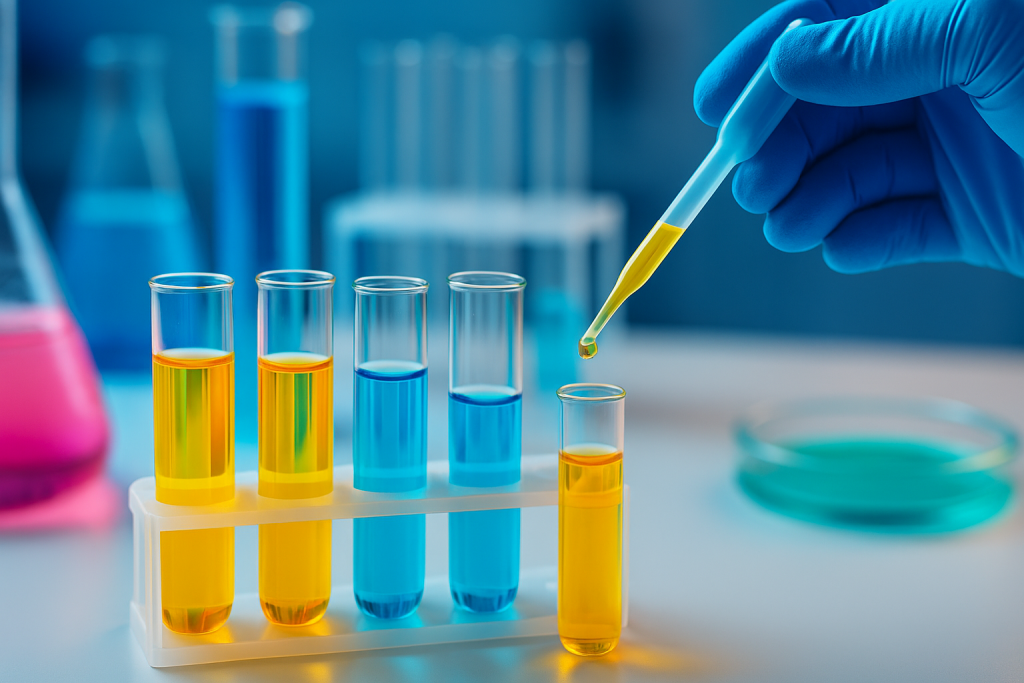
Scientific testing depends on consistency more than anything else. Devices used in diagnostics, product development, or laboratory research need to be calibrated against a material that behaves the same way every time. Real urine can’t provide that level of predictability because its chemistry varies from person to person, changes after collection, and degrades quickly. That problem pushed laboratories and manufacturers to look for a stable alternative.
Artificial urine has transformed calibration workflows because it mirrors the core chemical structure of real urine without the biological unpredictability. When the sample stays constant, engineers and researchers can trust that any changes in results come from the device being tested — not from sample variability. This keeps testing faster, more controlled, and easier to repeat in long-term studies.
Before exploring the specific features that make artificial urine dependable today, let’s look at why consistency matters so much during calibration.
Calibration Only Works When the Sample Doesn’t Change
Every testing device — from a urinalysis machine to a wearable hydration monitor — is built around chemical detection. If the chemical markers in the sample fluctuate from hour to hour, calibration becomes unreliable. Real urine has this issue because pH, urea, specific gravity, and other markers shift based on hydration, diet, temperature, and storage time.
Artificial urine is designed to eliminate that variability. Each batch reflects the same level of chemical indicators, so engineers can run the same test repeatedly and get comparable outcomes. This allows manufacturers to set detection thresholds, sensitivity levels, and safety parameters with confidence. It also prevents delays caused by sample contamination or inconsistent readings that don’t match previous tests.
Stable samples reduce risk not only for calibration but also for quality control. When products move from prototype to mass production, the ability to test against a fixed formula ensures devices behave the same way in every unit shipped.
Why the Formula Matters in Real-World Lab Settings
Beyond basic chemical consistency, artificial urine needs to behave like real urine under different testing conditions. For example, many devices depend on markers such as conductivity, pH balance, or creatinine concentration to detect hydration levels or urinary abnormalities. If those elements are missing or poorly replicated, calibration may look successful in the lab but fail during real-world use.
This is why advanced formulations focus on achieving biological realism without biological instability.
What Makes a Synthetic Formula Reliable Enough for Calibration
In scientific settings, the most reliable formulas are those that support long-term, without forcing teams to constantly adjust their equipment. Many labs standardize their calibration process around Quick Fix synthetic urine because its formulation is engineered to maintain predictable chemical properties. Quick Fix Synthetic has become known among researchers for including key biological markers while remaining stable enough for controlled experiments. The ready-to-use pre-mixed format allows calibration work to start immediately rather than requiring preparation steps, and the long shelf life helps minimize interruptions during testing.
A strong synthetic formula gives device manufacturers greater confidence in performance benchmarks. When laboratory teams can run a test today, repeat it next month, and get identical readings, they know any irregular result stems from the machine rather than the fluid. This helps engineers improve their design instead of troubleshooting variables that never should have changed in the first place.
There is also a safety benefit. Using a controlled sample eliminates storage issues, disposal restrictions, and contamination risks tied to biological materials. For tech teams that run thousands of calibration checks before a product launch, replacing biological samples with a stable alternative helps avoid errors that could ripple into patient-facing environments later.
How This Affects Product Development and Industry Standards
Laboratories working with medical equipment, diagnostic strips, smart toilets, and hydration devices rely heavily on calibration data before a product is allowed to move forward. If data is inconsistent at this stage, companies risk releasing tools that raise false alarms or overlook abnormalities in real patients or users.
Artificial urine contributes to higher success rates during prototyping and production because it forces the device to prove reliability across dozens of test points. Sensitivity, detection thresholds, durability over time, and error-handling logic can all be examined without worrying about fluctuating samples. This improves engineering efficiency and shortens development timelines.
It also helps establish industry standards. When organizations test across the same controlled baseline, results become easier to compare across labs, companies, and device generations. That visibility is essential for improving quality across the broader medical and consumer-health landscape.
Final Thoughts
Artificial urine has become a staple in scientific calibration because it removes the biggest barrier to reliable testing: unpredictable biological samples. When the formula contains the right chemical markers and remains stable over time, researchers and engineers can evaluate device performance without uncertainty. This boosts precision in the lab, speeds up product development, and ensures higher confidence when new diagnostic and health-tech tools reach the public.
As research tools and health technologies continue to expand, the demand for highly dependable testing materials will only grow. Artificial urine fills that role by offering consistency where accuracy matters most.