Enterprise Resource Planning (ERP) systems have long served as the backbone of modern businesses. For decades, they have unified data, standardized processes, and provided a central source of truth across finance, supply chain, human resources, manufacturing, and other critical operations.
But today, a powerful shift is underway. Artificial intelligence is not just enhancing ERP systems—it’s fundamentally transforming them. The move is no longer about adding automation to routine tasks. ERP is evolving into a predictive, adaptive, and even autonomous decision-making engine.
This evolution marks the beginning of a new era: the rise of self-optimizing ERP platforms capable of anticipating problems, recommending actions, and ultimately operating with minimal human intervention.
In this article, we’ll explore how AI is rewriting the future of ERP and what businesses must do to prepare for the next generation of intelligent enterprise systems.
The Traditional ERP: Rule-Based and Reactive
Historically, ERP systems have followed a predictable pattern of functionality. They were:
- Rule-based: Everything depended on predefined workflows and logic.
- Data-driven but not data-smart: ERPs stored massive volumes of information but lacked the ability to analyze it meaningfully without external tools.
- Dependent on manual intervention: Users had to input data, monitor processes, diagnose issues, and make decisions.
- Reactive rather than proactive: Reports showed what had happened—not what would happen next.
For many years, this was enough. But the complexity of modern business—fast-changing markets, global supply chains, and real-time expectations—has outpaced these systems’ capabilities.
Companies now require ERPs that can adapt dynamically, learn continuously, and react instantly.
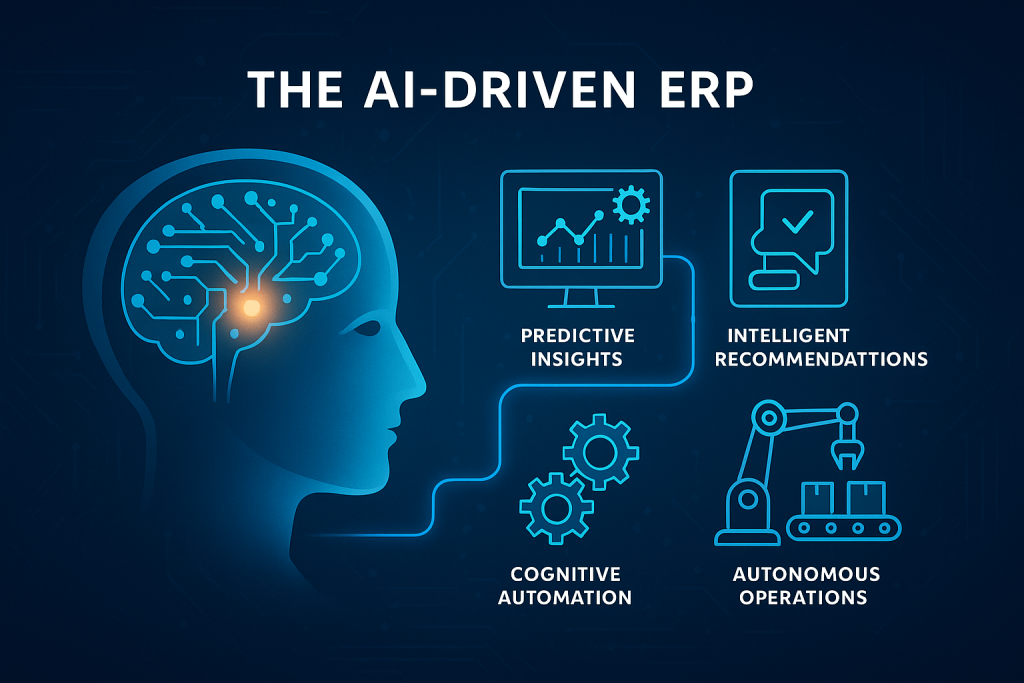
The AI-Driven ERP: Intelligent, Predictive, and Adaptive
Artificial intelligence has ushered in a new generation of ERP capabilities that go far beyond traditional automation. Today’s AI-layered ERPs offer:
Predictive Insights
AI can analyze historical and real-time data to forecast:
- Inventory shortages
- Equipment failures
- Demand fluctuations
- Cash flow trends
- Supply chain disruptions
Instead of reacting to a stockout, AI-driven ERP systems can predict it weeks in advance and recommend purchase orders automatically.
Cognitive Automation
Unlike rule-based automation, cognitive automation learns from patterns. This includes:
- Understanding documents
- Classifying data
- Enhancing workflows based on behavioral patterns
- Adapting processes without manual rule updates
For example, an AI-enabled ERP can automatically detect anomalies in invoices or categorize expenses with high accuracy.
Intelligent Recommendations
AI-powered ERPs can guide users through daily decisions:
- “Approve this purchase order based on historic supplier performance.”
- “Increase prices for this product group due to rising raw material costs.”
- “Redistribute labor to meet forecasted production surges.”
This guidance turns ERP systems into decision-support engines rather than passive data repositories.
From Intelligent to Autonomous: The Next Leap
The ultimate vision for AI in ERP is autonomous operations—where the system not only analyzes and recommends actions but executes them automatically when appropriate.
This shift resembles the progression of autonomous vehicles:
- Assisted ERP – Basic automation, user-driven decisions
- Augmented ERP – AI-supported insights and recommendations
- Autonomous ERP – Self-optimizing, self-correcting, minimal human intervention
What Autonomous ERP Looks Like:
- Self-healing processes: Automatically resolves data inconsistencies, delays, and workflow bottlenecks.
- Auto-executed transactions: Purchase orders, replenishments, and scheduling happen without human-triggered workflows.
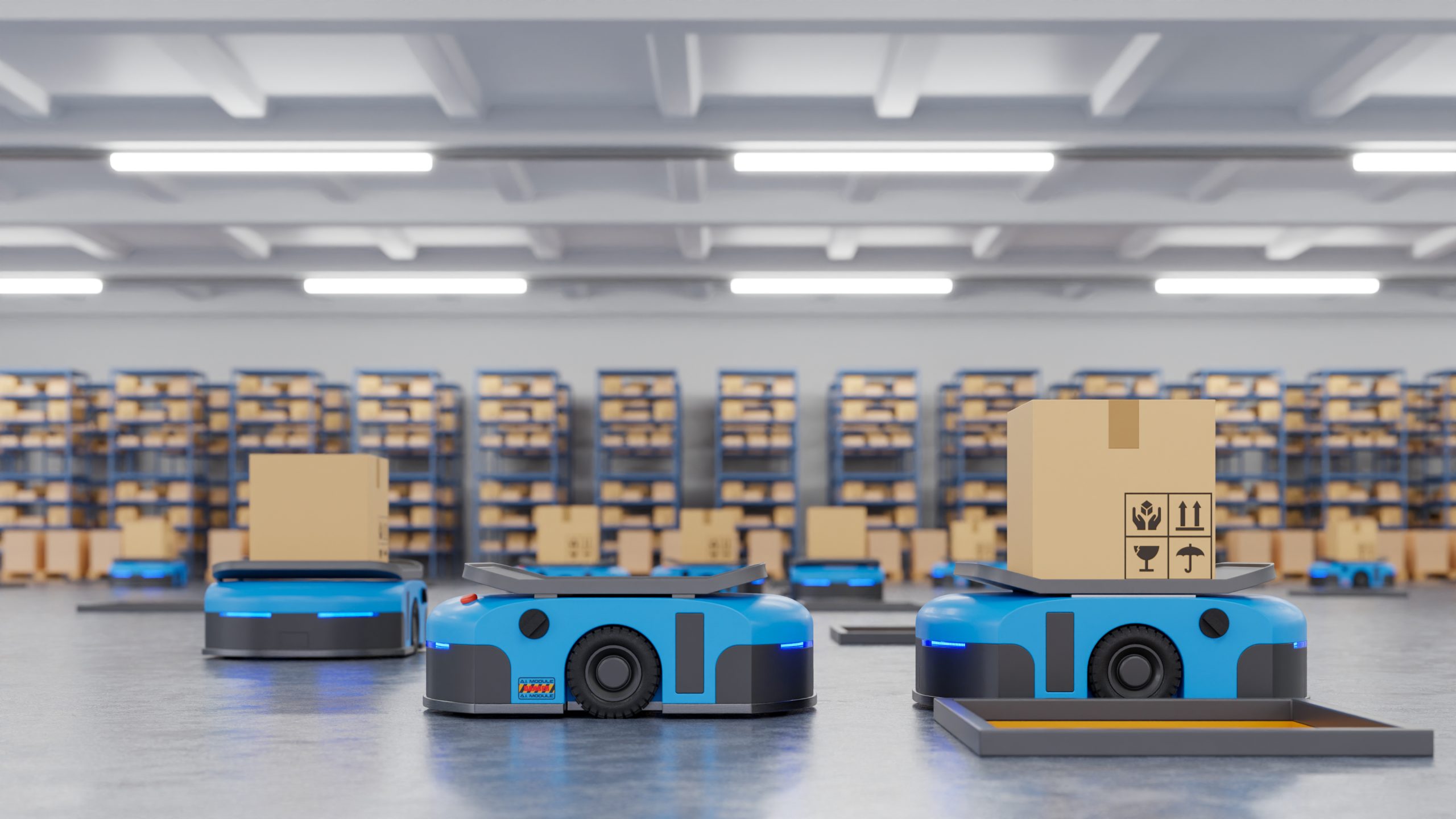
- AI-led supply chain orchestration: Systems dynamically reroute, reschedule, or reprioritize resources during disruptions.
- Continuous optimization: ERP learns from outcomes and improves itself over time.
This evolution will reduce operational errors, accelerate decision cycles, and dramatically improve efficiency.
The AI Technologies Powering Next-Generation ERP
Several AI advancements are converging to make autonomous ERP a reality:
Machine Learning (ML)
Learns patterns from historical data to predict future outcomes, detect anomalies, and optimize processes.
Natural Language Processing (NLP)
Enables conversational interactions with ERP systems:
“Show me last quarter’s sales performance in Europe.”
Robotic Process Automation (RPA)
Handles repetitive rule-based tasks across systems—enhanced further when combined with AI for smart decision-making.
Computer Vision
Used for automated quality inspections, OCR for document processing, and asset monitoring.
Generative AI
Creates reports, forecasts, and workflow optimizations; improves coding and customization within ERP environments.
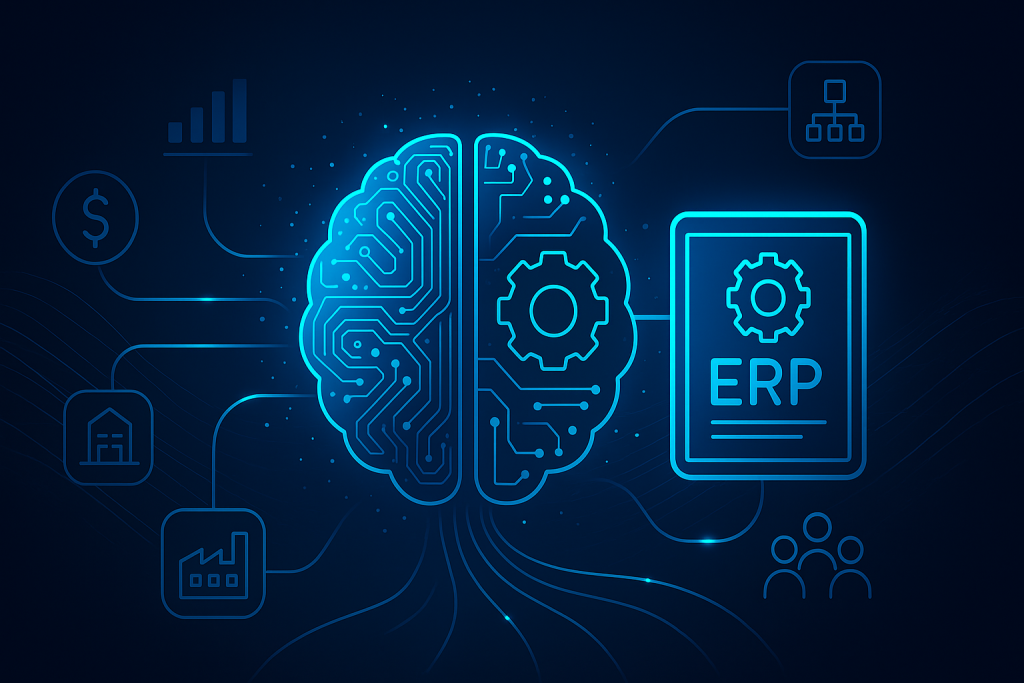
Together, these technologies elevate ERP systems from transactional databases to cognitive, responsive business brains.
Why Businesses Must Act Now
The transformation of ERP is not a distant possibility—it’s happening now, and companies that delay adoption risk falling behind.
Here’s why organizations must prioritize AI-enabled ERP evolution:
Competitiveness
Companies leveraging AI in ERP outperform others in speed, efficiency, and agility.
Data Overload
Businesses generate more data than ever; AI is the only scalable way to extract value.
Workforce Efficiency
AI offloads repetitive tasks, allowing employees to focus on strategic activities.
Market Dynamics
Real-time adaptability is becoming a requirement, not a luxury.
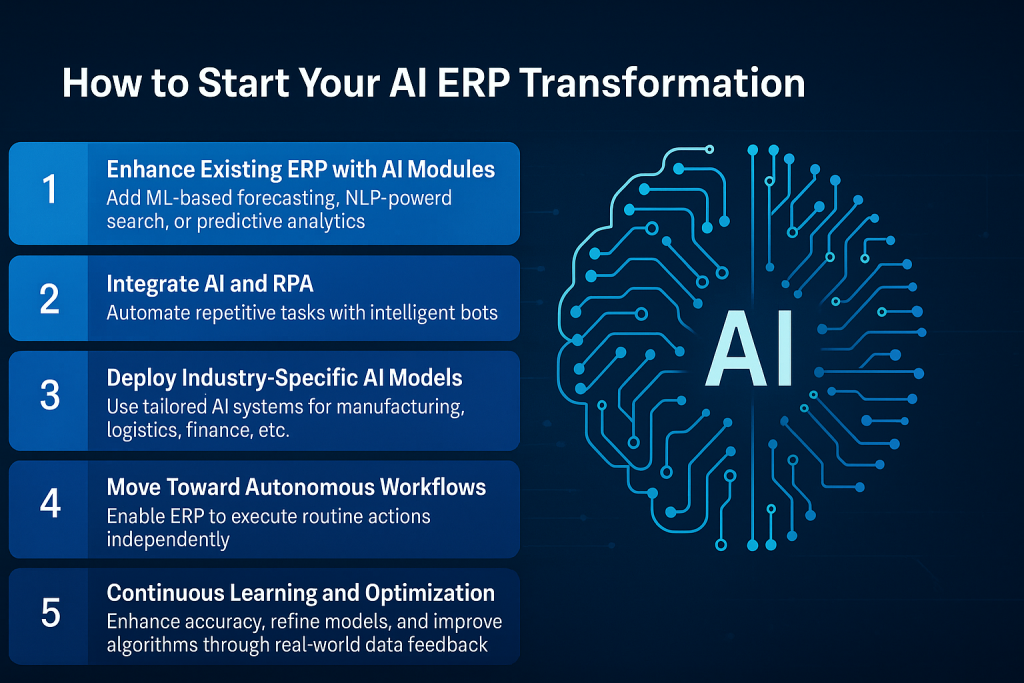
How to Start Your AI ERP Transformation
Organizations can take a phased approach:
Phase 1: Enhance Existing ERP with AI Modules
Add ML-based forecasting, NLP-powered search, or predictive analytics.
Phase 2: Integrate AI and RPA
Automate repetitive tasks with intelligent bots.
Phase 3: Deploy Industry-Specific AI Models
Use tailored AI systems for manufacturing, logistics, finance, etc.
Phase 4: Move Toward Autonomous Workflows
Enable ERP to execute routine actions independently.
Phase 5: Continuous Learning and Optimization
Enhance accuracy, refine models, and improve algorithms through real-world data feedback.
Partnering with AI development experts can accelerate this journey. Companies seeking specialized expertise may consider solutions such as artificial intelligence software development solutions to build, integrate, and scale AI-driven ERP capabilities effectively.
The Future of ERP: A Digital Nervous System for the Enterprise
In the near future, AI-enabled ERPs will resemble an organization’s nervous system—constantly sensing, processing, and responding.
Here’s what that world might look like:
- Self-adjusting supply chains that rebalance inventory in real time
- Production floors where machines schedule their own maintenance
- Finance systems that automatically optimize capital allocation
- HR platforms that anticipate workforce needs and engage employees proactively
- Customer ecosystems that resolve issues before they escalate
ERP will no longer be a passive tool—it will be an active, intelligent partner that drives organizational performance.
Conclusion: AI Is Not Just Enhancing ERP – It’s Redefining It
AI’s impact on ERP is nothing short of revolutionary. The shift from rule-based to predictive and autonomous systems represents a new dawn for enterprise operations. Businesses that embrace this transformation will gain unprecedented agility, operational resilience, and competitive advantage.
The future belongs to companies that see ERP not as a system of record, but as a system of intelligence.
As AI continues to evolve, ERPs will move from being digital backbones to digital brains—thinking, learning, and acting on behalf of the enterprise.
Now is the moment for organizations to take the next step in their digital evolution and prepare for the AI-driven ERP era.