
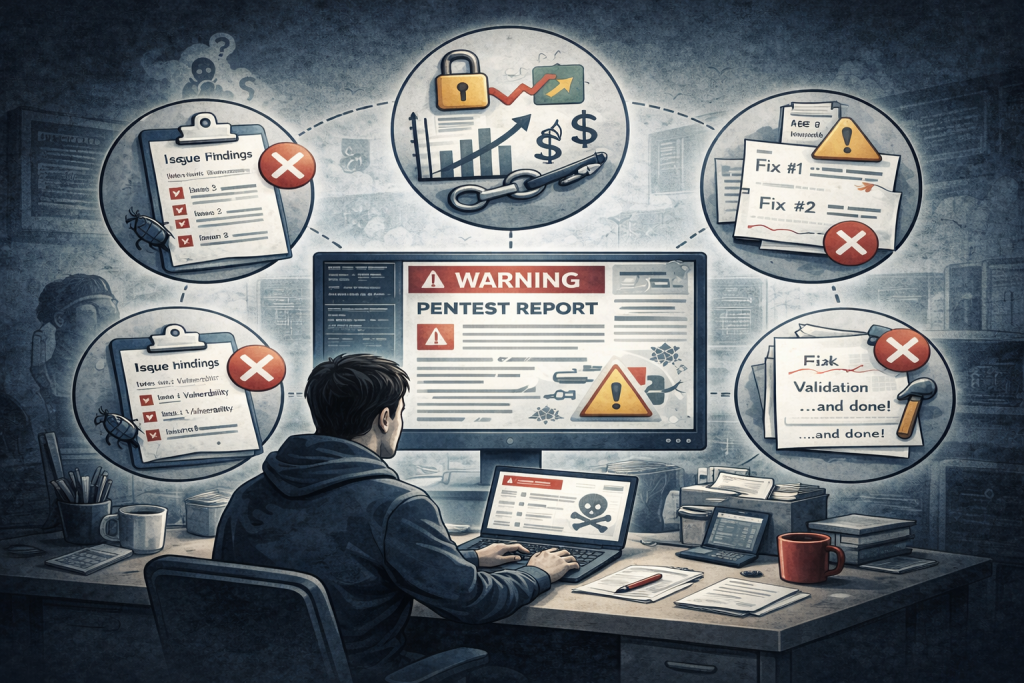
Security teams obsess over exploit chains, payloads, and clever pivots, then ruin the impact with sloppy reporting. The test itself rarely sinks a program. The report does. Executives read it, auditors archive it, and engineers live in it for months. When the document is confusing, overstates risk, or hides key details, the entire engagement appears weak. A strong report translates technical chaos into clear decisions and measurable actions that real teams can follow. The real craft sits at the keyboard after the test, not during the scan or exploit phase.
Vague Findings With No Real Story
Many reports simply list vulnerabilities without providing any context or explanation. There is no narrative, no context, and no underlying cause. That approach wastes valuable data and turns serious work into noise. A useful finding explains where the issue sits, how it was discovered, who it affects, and what could realistically happen next. Screenshots help, but a structured narrative helps more and keeps everyone aligned. Testers can use pentest reporting tools for consistency, then tighten the language so every item reads like a short case study. That structure enables non-specialists to understand both the problem and the consequences.
No Link Between Risk and Business Impact
A critical SQL injection against a forgotten demo app often gets the same red flag as a flaw in the customer portal. That kind of flattening causes leadership to stop trusting severity labels. Risk needs a bridge to revenue, reputation, operations, and compliance. Each finding should answer a blunt question: what changes for the business if someone exploits this? Include data types, process disruptions, customer exposure, and regulatory considerations. Add short, concrete scenarios to illustrate outcomes and likely headlines. Once that link exists, prioritization becomes obvious, and arguments about color codes mostly disappear.

Messy Structure And Inconsistent Language
Readers overlook technical jargon. Chaos is not forgiven. Rapid asset switching, inconsistent naming conventions, and buried critical outcomes lead to fatigue and skepticism. Always start with an executive summary, then scope, methods, and findings. Each finding should include a summary, impact, evidence, likelihood, and remediation, in that order. Plain language wins. Slang, acronyms, and theatrical language confound rather than impress. Consistency allows busy reviewers to spot patterns, track ownership, and go deeper only when needed.
Weak Or Unrealistic Remediation Advice
Telling teams to “fix input validation” or “harden configuration” provides no guidance. It signals that the tester stopped thinking once exploitation worked. Strong remediation guidance stays specific and realistic. It references concrete controls, configuration examples, and, when advantageous, vendor documentation or standards. Legacy systems, complex integrations, restricted maintenance windows, and staffing shortages are also taken into account. Engineers may make faster judgments and negotiate timelines using assistance that offers trade-offs. Over time, those clear recommendations build trust, which matters more than any single proof of concept ever will in practice.
Conclusion
The penetration testing is fun in the lab, but the report determines value for organizations. Clarity, organization, and relevant risk framing distinguish experts’ assessments from noisy vulnerability lists. When findings tell a story, relate to business impact, and offer solutions, they create a roadmap, not a compliance artifact. Refined reporting mitigates risk and enhances credibility among company leadership and peers. Credibility in security buys funds, time, and attention for tough decisions.