Digital transformation is changing the way companies run their employee management systems, organize daily tasks at work, and manage their routine administrative functions. In many cases, manual based onboarding processes (paperwork, manual approval, multiple systems) are now being replaced with connected digital platform based solutions. The benefits include increased operational efficiencies, improved accuracy of employee record keeping and creating a more structured working environment.
Employee Onboarding is increasingly a connected process, as organizations use Enterprise Resource Planning (ERP), Human Resource Management Software and Cloud Based Technology. But as well as implementing new technology, organizations need to consider how Digital Information, Physical Resources and Employee Identification all interact with one another for successful Workplace Transformation.
Understanding Digital Transformation in Employee Management
Digital transformation of employee management is the use of technology to enhance the ways that organizations gather, process, retain, and manage employee data. The process also includes replacing manual processes for administration with digital workflows and integrating various departments of an organization through interconnected systems.
For example, traditionally, an HR Department will use multiple spreadsheets to keep track of employee data (i.e. name, contact details etc.), attendance, payroll, and leave records. Many of the above mentioned tasks can be brought into one system by modern HR Platforms, providing authorization for employees/managers to view relevant information via a single location.
Enterprise resource planning (ERP) systems allow employees to link together the various business units including HR, finance, procurement and others. ERP systems reduce the amount of information that is lost between these different departments, allowing for a more effective way to coordinate all aspects of the company.
The goal isn’t just to make all paper based documents available electronically. It is about creating more uniform processes which will allow for better decision making and decrease the amount of unnecessary paperwork.
How Digital Tools Are Transforming Employee Onboarding
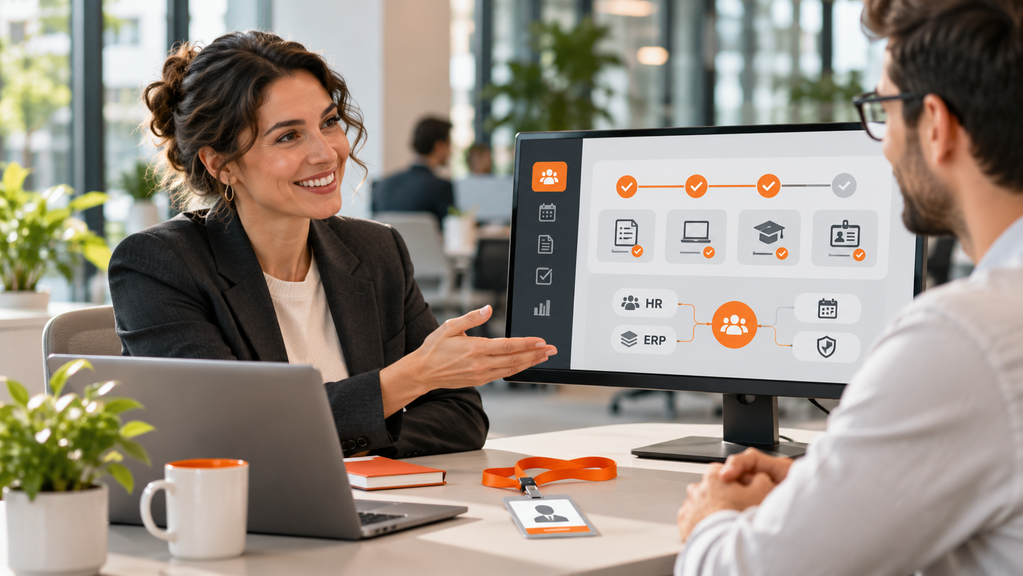
Employee onboarding starts prior to an individual’s official start date. Digital technology provides companies with an opportunity to complete numerous tasks related to pre-onboarding, allowing new employees to have a structured orientation to their job duties.
With the use of electronic forms, digital contracts, document submissions through a portal, and automated notifications; there is less need for physical paperwork. Also, many new employees will be able to complete all the necessary administrative processes online and not have to go from department to department in order to submit their documentation.
In addition to helping HR teams allocate on-boarding tasks to those responsible for completing them, automation allows HR teams to send automated messages to specific departments (e.g., IT department) with a request for computer preparation/software account creation, as well as enabling managers to schedule initial meetings/training sessions.
Digital onboarding software can also keep track of when an employee completes each step in their onboarding process. HR professionals will be able to see if employees are missing any paperwork, have completed the required approvals, or still have remaining training requirements. This allows HR professionals to quickly identify what is needed to move an employee forward through the onboarding process.
These enhancements decrease the amount of time that employees have to wait for service from their human resources department. This will enable HR professionals to focus more on assisting the needs of employees rather than spending time completing repetitive administrative duties.
The Role of ERP Systems in Modern Workforce Management
The use of ERP systems helps organizations integrate the management of their employees with other areas of operation within the company. Instead of viewing human resources (HR) as a separate function, integrated systems provide organizations with the ability to share information about employees with various functions throughout the organization.
Employee records could link up to payroll, financial reporting, procurement, and workforce planning. As soon as a person starts working for a company, the necessary information can then become accessible to authorized departments based on what each department does.
The integration of these systems increases coordination and minimizes the potential for inconsistencies in data across multiple applications. Additionally, this integration provides managers with insights into their workforce-related expenses, as well as the resources required to support the operations of their organizations.
Reliable data is essential to the success of an organization’s ERP implementation. Organizations need to create and maintain specific processes for updating employee data, managing user access to systems, and fixing erroneous records. Otherwise, automated processes will just replicate existing administrative mistakes instead of addressing them.
Digital Identity Management and Workplace Identification
The next step in employee management is to develop a means for identifying employees. It is critical for companies to establish methods that allow for the identification of employees, visitors, contractors and anyone else entering the company’s property.
Digital identity management allows companies to keep track of their employees’ data, their credentials used for logging into systems, and the permissions each employee has to access specific parts of the company’s network. Depending upon the type of technology that is being used by the company, digital identity management systems can be linked with other security systems such as those controlling who can enter the office building, visitor management systems, and other types of security systems.
Employee ID cards, badge holders, and lanyards will remain useful as we continue to use digital systems for physical identification. Staff members can use these tools to show who they are at work, school, hospital, factory or any other common area.
Organizations with responsibility for managing identification materials for employees can use the services of companies like 4inlanyards who produce customized lanyards, event badges, badge reels, and other employee ID accessory items. The availability of these types of products demonstrates that the use of physical identification materials is still an integral part of daily administrative processes within organizations despite the transition of employee record-keeping to digital formats.
Organizations must recognize that exhibiting an ID badge is not equivalent to properly validating a person’s identity. Where appropriate, organizations should utilize suitable validation and access control tools. In addition, organizations should develop procedures for issuing new credentials to replace those that have been misplaced, as well as for modifying employee access rights based on changes in position or termination of employment.
Improving Workplace Management Through Automation
Businesses are using automation to make handling a variety of everyday business tasks much more effective. For example, automated systems are able to handle attendance tracking, employee requests for time off (leave requests), employee work schedules, and approvals of employee requests.
An employee has the ability to request time off using an online human resources (HR) system, which will notify their manager that they have applied for time off. The manager can then review the application. If the manager approves the application, the information will be updated in the employees’ work schedule.
Automated reminders can be used by an employer to remind employees to meet training requirements, update their personal records, and/or confirm employee understanding of company policies.
The use of these automated systems improves consistency while reducing the need for manual coordination among different departments. However, automation must be utilized to assist employees in making decisions rather than completely replacing employees’ ability to make decisions. Employee relations professionals and managers will continue to review exceptional cases, address employee issues, and confirm that all employees are treated equally under company policy.
The Connection Between Digital Onboarding and Employee Experience
An employee’s first impressions of an organization can affect the level of comfort and confidence that the employee has in his/her new job. If the employee experiences confusion during his/her onboarding experience, it can cause undue stress on the employee because he/she doesn’t have knowledge as to where to get answers to questions or who to ask for help.
The use of a digital employee portal may help to make the above mentioned process simpler, as employees can access all necessary information such as training materials, company policies, work schedule, and other critical company updates.
The use of personalized employee onboarding processes can allow employees to better understand what they are expected to do and complete those tasks at a reasonable rate.
However, technology does not alone produce a good working environment. Managers who are supportive and available to provide assistance, open lines of communication, and opportunities to inquire about tasks and responsibilities will always be required. A successful onboarding process utilizes both digital technology and personal support.
Challenges Businesses Face When Digitising Employee Management
Despite its advantages, digital transformation introduces several challenges.
Data privacy is a significant issue since HR systems store private employee data. Therefore, organizations must implement adequate security measures, such as access controls and secure storage, along with developing clear guidelines for handling data.
In addition to being complex, system integration can be difficult when an organization uses legacy software that does not interact well with modern enterprise resource planning (ERP) platforms. A business’s migration process will typically involve technical planning, data cleaning, and training for employees.
Employees are often hesitant to adopt new systems due to lack of familiarity with them, as well as a reluctance to deviate from their current methods. Employee training on the use of new technology and explaining the advantages of using the technology will assist in increasing adoption rates.
Businesses should be aware that there are other expenses associated with computer software, such as continuing maintenance, cybersecurity, upgrading the system, and receiving help from a technician.
Integrating Physical and Digital Workplace Systems
A totally integrated work environment does not require that all processes be converted to digital format. Resources that exist in the physical world are still very much involved in day-to-day operations.
In many cases, there will be two separate software applications being used to manage the same process (or parts thereof). One application might be used to track employee data (an HR system), and another might be used to control access to buildings (an Access Control System). In addition, physical ID badges/cards may also be used in conjunction with both of these systems so that employees are easily recognized within common areas of the company.
Maintaining the same level of consistency with regard to both the employee’s online and physical identity records is difficult. Employees who have changed their job role (department), received additional responsibilities, or left the company need to have their records and authorization permissions updated in a timely manner.
A coordinated approach to prevent expired credentials, administrative confusion, and unnecessary security risk.
Future Trends in Employee Onboarding and Workplace Management
Artificial intelligence is providing alternative methods of workforce management. Tools utilizing artificial intelligence can provide answers to frequently asked human resource questions, suggest training materials, organize information and identify trends in workforce data.
The availability of mobile-based human resources (HR) systems allows employees to retrieve work-related data from their phones, rather than having to use a desktop computer.
In the coming years there will likely be increased connection among Enterprise Resource Planning (ERP) systems, Human Resources (HR) platforms, Identity Management (IDM) systems, and workplace technology that could result in more cohesive employee experiences.
Regardless of whether businesses use automated technology or not, they must find a way to maintain an appropriate balance between the benefits of automation and other aspects of running a business such as protecting customer privacy, being open about how customers’ data is collected and used (transparency), and managing customer data responsibly. Automation can assist businesses in creating a work environment where employees are able to easily access the tools they require to perform their jobs effectively. However, automation cannot take away the support that employees receive from managers and colleagues.
Final Thoughts
Digital transformation has changed the way employees are onboarded and the way that workplaces operate. Digital transformation provides a connection for employees to access data, automates many of the routine tasks that used to be performed manually, and creates a better communication channel between different departments in an organization. Many organizations use Enterprise Resource Planning (ERP) systems and Human Resources (HR) software to create more reliable records and provide employees with a simpler method of accessing crucial information related to their jobs.
Transformational success requires much more than simply adding new software to a business. Businesses need to evaluate employee experience, data protection, physical identity verification and how they will integrate existing day-to-day business operations.
Organisations may develop more effective, safer, and adaptable working environments by integrating reliable digital technology with structured physical assets and supportive employees.